Decarb vs Raw Cannabis: What Heat Changes and Why It Matters
Raw cannabis is mostly THCA, a form that does not get you high. Decarboxylated (“decarbed”) cannabis has been heated so that THCA becomes THC, the compound that produces the effects most people want. Smoking and vaping do that conversion in the moment. Edibles, infused butter and oils need it done beforehand. If you shop for flower in Alameda County, the practical question is which form you are buying and how you plan to use it. We deliver lab-tested flower, pre-rolls, vapes, concentrates and edibles across the county, and the lab results that come with them are the best tool for answering that question.
TL;DR
- Raw cannabis holds mostly acidic cannabinoids (THCA, CBDA). Heat removes a carboxyl group and turns them into THC and CBD.
- Eating raw flower generally does not cause a high. Lighting it, vaping it or baking it does.
- For cooking, decarb first. A common home window is about 240°F for 30 to 40 minutes, and 225°F for 45 minutes also works.
- Too much heat or time degrades cannabinoids, and edibles can take up to two hours to hit, so start low and wait.
- On a lab report (COA), the total THC figure accounts for THCA, so it tells you what the flower will deliver once heated.
Table of Contents
- What actually changes when cannabis is decarbed
- Does raw cannabis get you high?
- Raw vs decarbed: a side-by-side
- When you need to decarb, and when you do not
- How long and how hot: the home decarb window
- Reading a COA: where raw and decarbed meet
- Dosing: the part that really catches people
- Which route fits you?
- Order lab-tested flower and edibles in Alameda County
- Our perspective
- FAQ
- Sources
What actually changes when cannabis is decarbed
A cannabis plant does not make THC directly. It makes THCA, and a 2021 review notes that fresh cannabis biomass carries about 95% of its THC, CBD and CBC in these acidic parent forms. The same review says they convert slowly during storage, and faster on heating.
Chemically, decarboxylation strips a carboxyl group off the molecule and releases carbon dioxide. A 2022 review in PMC describes the result: THCA becomes THC, CBDA becomes CBD and CBGA becomes CBG. The National Academies’ 2017 report on cannabis health effects says these acidic precursors are converted by heat or light during storage or combustion.
This matters because the two forms behave differently in the body. A 2019 study found acidic cannabinoids such as THCA have poor potency at cannabinoid receptors compared with their decarboxylated forms. Put plainly: the compound that makes the plant active is mostly not there until heat creates it.
Does raw cannabis get you high?
Generally, no. The CDC states that THCA is not psychoactive, but heat from smoking, vaping or dabbing converts it to impairing THC. The Canadian Centre on Substance Use and Addiction says in a 2020 report that eating or drinking raw cannabis generally does not cause intoxicating effects because it contains THCA rather than THC, and that heat and time drive the conversion.
The Filer review adds that there is little, if any, conversion of THCA to THC inside the body. So chewing a bud or dropping it into a smoothie will not do what a properly prepared edible does.
The flip side is the reason a cured jar of flower still works when you light it. Curing and storage cause a small amount of conversion on their own, but the flame or vaporizer finishes the job in seconds. That is why flower sold for smoking is not decarbed in advance, and why you do not need to do anything to it before using it that way.
Raw vs decarbed: a side-by-side
| Raw cannabis | Decarbed cannabis | |
|---|---|---|
| Main cannabinoids | THCA, CBDA, CBGA | THC, CBD, CBG |
| Psychoactive when eaten | Generally not | Yes, once absorbed |
| How it is made | Harvested, dried and cured | Heated (oven, vaporizer, flame) |
| Best for | Starting material | Edibles, infusions, capsules, topical bases |
| Appearance | Bright green | Lighter, golden-brown and toasted |
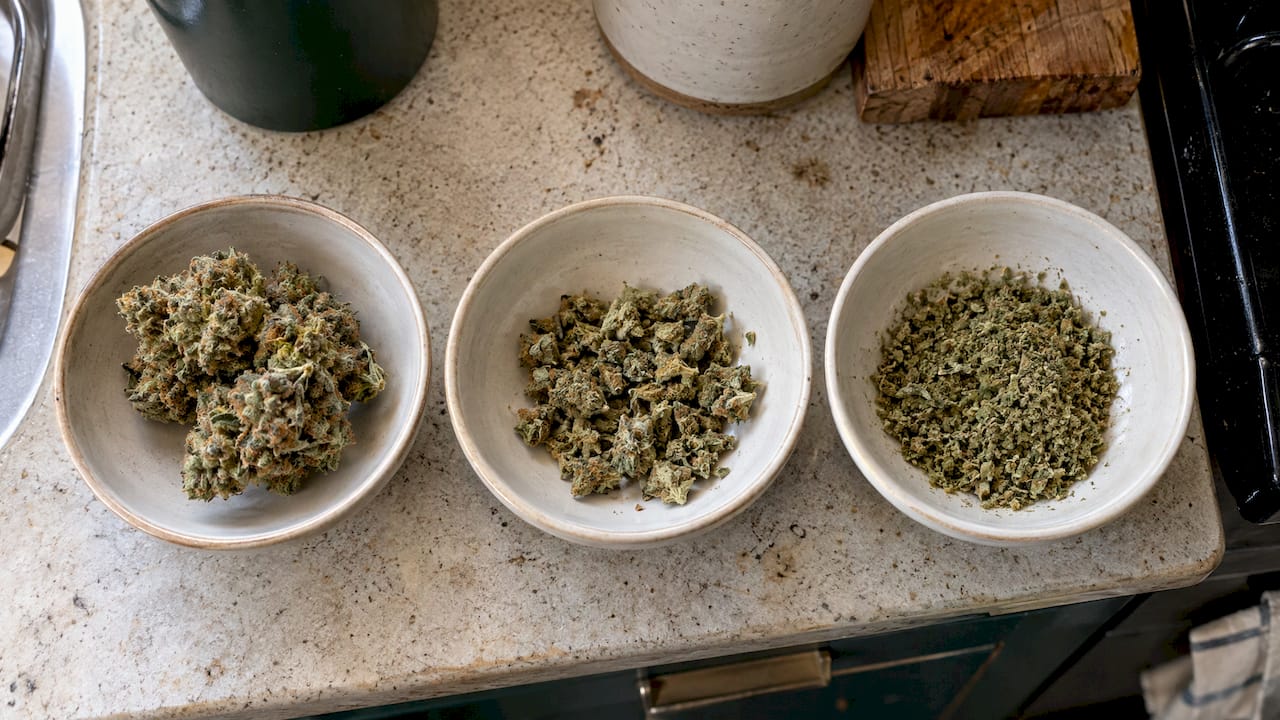
The color shift in the last row is a useful visual cue when you decarb at home: flower that has turned from vibrant green to a toasted golden brown has had the heat it needs.
When you need to decarb, and when you do not
You do not need to decarb if you are smoking, vaping or dabbing. Project CBD’s guide explains that smoking and vaping decarboxylate THCA during use. The same applies to pre-rolls and to a vaporizer loaded with flower.
You do need to decarb if you are putting flower into food, butter, oil or tinctures. The CCSA report describes sufficient decarboxylation as a key preparation step for edibles, and Project CBD notes that infusions generally use cannabis that has been decarboxylated before it goes into the food. Skip this step and a batch of brownies will be mild at best and a waste of good flower at worst.
If you would rather not cook at all, our edibles category is the straightforward route: you order, we deliver, and you choose a product with its dose and lab results in view.
How long and how hot: the home decarb window
Two variables control the outcome: temperature and time. A 2022 review of postharvest operations cites a study in which THCA kept declining at 80°C (176°F) over an hour, and conversion became more abrupt above 100°C (212°F) over 60 minutes. The 2019 study found decarboxylation can occur in open reactors at 100°C for 60 minutes, while stressing that ideal conditions vary between cannabinoid acids and cultivars.
For a home oven, the widely used range is around 225°F to 240°F:
- 240°F (115°C) for 30 to 40 minutes. This is the routine in our step-by-step decarb guide.
- 225°F (107°C) for 45 minutes, then 30 minutes of cooling, is the easy method described by CBD Oracle, with the oven preheated and the flower covered on foil or parchment.
- 25 minutes versus 40 minutes. Project CBD says THCA converts faster than CBDA. About 25 minutes can suffice for THCA at its cited oven conditions, while 40 minutes is a common recommendation when you also want more complete CBDA conversion.
The Filer review adds a detail worth knowing: at 110°C (230°F), THCA decarboxylated faster than CBDA and CBGA. If you are working with a CBD-rich or balanced product, lean toward the longer end of the window. Our THC vs CBD explainer shows how those two compounds differ in effect.
Where decarbing goes wrong
More heat is not better. The 2021 review warns that excessive or prolonged heating can decompose cannabinoids, cutting yield and adding impurities. Filer’s review notes that oxygen during heating can promote oxidized side products and lower the amount of neutral cannabinoid you end up with. In practice:
- Oven hot spots. Ovens drift from their dial. An inexpensive oven thermometer saves a batch.
- Too hot, too fast. Going well past the window burns off cannabinoids and aroma compounds. Our terpenes guide explains why those aromatics are worth protecting.
- Uncovered flower. Covering the tray with a second layer of parchment limits exposure to air and keeps the smell in the kitchen down.
- Skipping the cool-down. Letting the tray rest about 30 minutes before you handle it is standard in the recipes above.
Should you grind before decarbing?
This is one of the most common questions, and the guidance from cooking guides is consistent: break the flower by hand into coarse, pea-sized pieces rather than grinding it to powder. Fine grinding knocks trichomes, the resin glands that carry most of the cannabinoids, onto the grinder, and fine powder can scorch and pull a grassy flavor into your butter or oil. Grind finely afterward only if the recipe, such as capsules, calls for it. No lab has settled the exact particle size, so treat this as kitchen practice rather than a measured rule.
Reading a COA: where raw and decarbed meet
A certificate of analysis lists THCA and THC separately. If you only glance at the “THC” line, a flower can look weak when it is not. The number that reflects what you will get once the flower is heated is total THC, which accounts for the conversion of THCA. Our COA walkthrough shows each line on a real report, and the explainer on why THC percentage misleads covers the total THC rule in detail.
If you want the chemistry behind it in one more place, this piece on how THCA converts to THC lays out the process. And for a concentrate user, heat matters again: a guide to THCA dab temperatures shows why the same material feels different at different temperatures.
Dosing: the part that really catches people
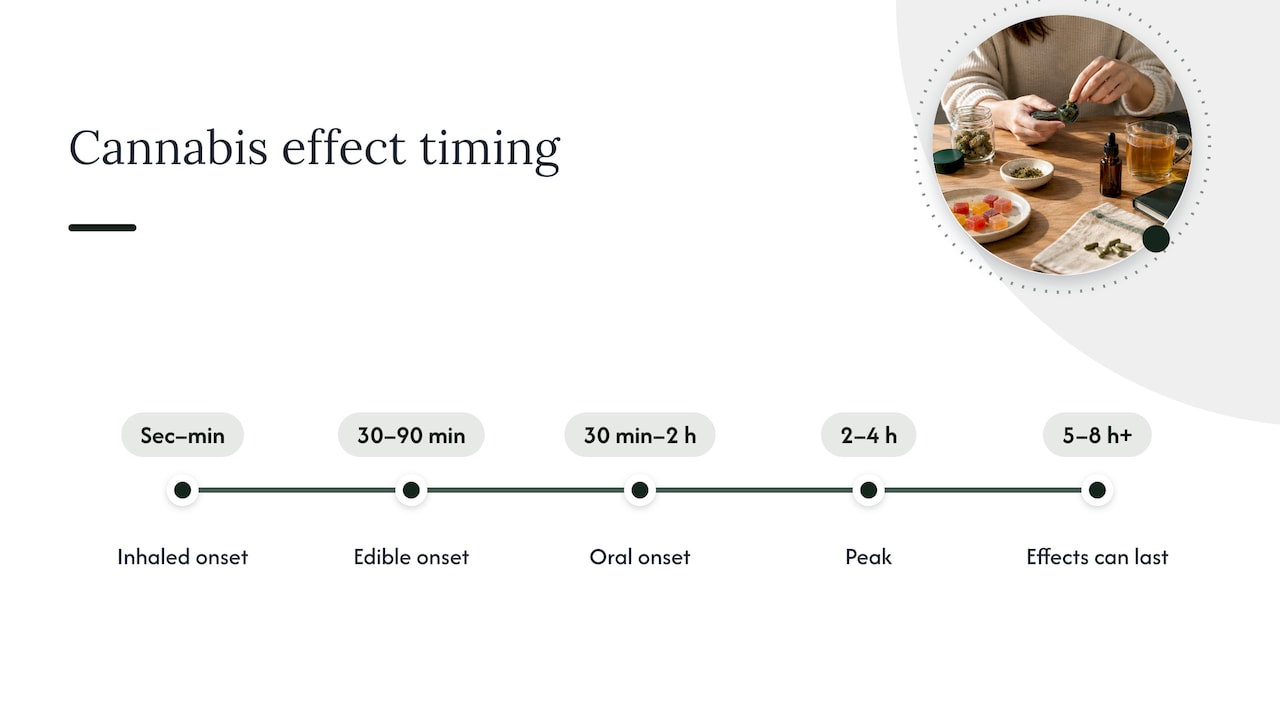
Heat changes timing as well as potency. The National Academies report says inhaled THC can be felt within seconds to minutes, while oral cannabis may take 30 minutes to two hours and can last five to eight hours or longer. Healthline puts onset for edible THC at 30 to 90 minutes, with a peak around two to four hours, and advises starting low and waiting several hours before taking more.
That gap is why homemade edibles from decarbed flower are tricky for first-timers: you rarely know the exact potency of a batch, and the delay invites a second portion too soon. The CCSA notes THC can cause impairment and, at high doses, severe anxiety, panic, heart palpitations and paranoia. The CDC adds that THC can affect memory, attention, decision-making and risk-taking regardless of how it is consumed, and that smoking can expose people nearby to harmful chemicals. Do not drive or operate anything after use, and keep all cannabis away from children and pets. Cannabis is for adults 21 and over. If you take medication or have a heart or mental health condition, talk with your doctor before using it.
A labeled product with a stated dose per piece takes most of that guesswork away, which is the practical advantage of buying edibles with lab results instead of estimating at home.
Which route fits you?
- You want fast, simple effects. Flower, pre-rolls or a vape. No prep, heat does the work as you use it.
- You want to cook. Order flower, decarb it using the routine above, then infuse. Our blog has the companion guides.
- You want no kitchen at all. Choose edibles, and start at a low dose.
- You are unsure about effects. Our strain guide gives you a place to start, and the 1:1 THC:CBD explainer is useful for a gentler profile.
Order lab-tested flower and edibles in Alameda County
We deliver same-day across Alameda County, including Oakland, Berkeley, Dublin and Fremont. Our menu is curated and sourced through a licensed supply chain, with verifiable lab results for the products we carry, so the THCA and total THC figures you read are the ones that matter for your plan. Browse flower, pre-rolls, vaporizers, concentrates, edibles and accessories, or place an order on our same-day delivery page. You can check which neighborhoods we cover on the delivery areas page.
Our perspective
Most of the confusion about raw versus decarbed cannabis comes down to one missing number. People see a THC percentage, assume it describes what is in the jar, and then wonder why a brownie did nothing or why flower tested so differently from what they expected.
We built our menu around batch consistency and verifiable lab results because that is what lets you plan. When you know the THCA and the total THC, you know what heat will give you, whether you light it, vape it or bake it. A licensed supply chain and a lab report you can read are what make that planning possible.
If you cook, decarb carefully and go slow with the first batch. If you do not, our edibles and flower are ready to order. Either way, start low and give it time.
Jake
FAQ
Can you eat raw cannabis?
You can, but it generally will not produce a high because raw cannabis contains THCA rather than THC. The CDC says THCA is not psychoactive until heat converts it. For an infused edible, decarb the flower first.
How long should I decarb cannabis at 225°F?
The common recommendation is 45 minutes at 225°F with the flower covered, followed by about 30 minutes of cooling. At 240°F, 30 to 40 minutes is the typical window. Use an oven thermometer, since home ovens often run off their setting.
Do I need to decarb flower before smoking or vaping it?
No. Smoking and vaping apply enough heat to convert THCA to THC as you use it. Decarbing is for edibles, oils, butters and other preparations that never get that direct heat.
Why does the THC number on a COA look low for flower?
The COA lists THCA and THC separately, and raw flower is mostly THCA. Look at the total THC figure, which accounts for the conversion that happens when the flower is heated.
Sources
- Cannabis: The Health Effects of Cannabis and Cannabinoids (National Academies, 2017)
- Acidic Cannabinoid Decarboxylation (PMC, 2022)
- Extractions of Medical Cannabis Cultivars (PMC, 2019)
- The biosynthesis of the cannabinoids (PMC, 2021)
- Postharvest Operations of Cannabis (PMC, 2022)
- Cannabis Frequently Asked Questions (CDC)
- Edible Cannabis Extracts and Topicals report (CCSA, 2020)
- Decarboxylating Cannabis (Project CBD)
- Eating Weed: Safety, Benefits, and Side Effects (Healthline)
- How THCA converts to THC
- THCA dab temperatures
Recommended
Ready to order?
Licensed, same-day cannabis delivery across Oakland, Berkeley, Fremont and all of Alameda County.
Order Online