
Cannabis Terpenes in Alameda County: Smell, COAs, and 160–175°C Vaping
September 14, 2026
Cannabis Terpenes in Alameda County: Smell, COAs, and 160–175°C Vaping
Terpenes are the plant’s aromatic molecules, and they’re the reason a jar of Wedding Cake smells nothing like a jar of Chem Reserve. They reliably predict smell and taste. What they don’t reliably predict is a specific effect. One exception stands out: beta caryophyllene binds directly to CB2 receptors in preclinical work, giving it a real mechanistic story. This guide covers the major terpene profiles, how to read a lab report, and where to store your stash so it still smells like something when you actually smoke it.
TL;DR:
- Terpene profiles vary widely among strains, with monoterpenes dominating fresh aroma and sesquiterpenes surviving better during processing.
- Beta caryophyllene is the only terpene with confirmed direct action on CB2 receptors, but effects attributed to other terpenes remain mostly anecdotal or mechanistic.
- Lab reports should include batch-specific IDs, GC-MS accreditation, and recent testing dates for reliable evaluation of terpene content.
- Proper storage limits terpene loss to several weeks or months, especially under heat, light, and oxygen exposure.
- Vaporizing at 160°C to 175°C preserves aromatic monoterpenes, while higher temperatures above 200°C increase cannabinoid extraction but risk terpene degradation.
Table of Contents
- What Terpenes Are and How Cannabis Makes Them
- Evidence, Limitations, and Why “Entourage Effect” Deserves Skepticism
- How to Read a Terpene Report Without Getting Fooled
- Storing Flower So the Terpenes Survive
- Finding the Right Vape Temperature for the Terpene You Want
- Why We Built This Guide Around Lab Data, Not Marketing Copy
- Order Lab-Tested Flower With Terpene Data You Can Actually Check
- Where This Information Comes From
- Sources
- FAQ
What Terpenes Are and How Cannabis Makes Them
Terpenes are volatile compounds built from isoprene units, produced and stored inside the sticky trichomes covering cannabis flowers. Chemists split them into two practical groups.
- Monoterpenes (C10): limonene, myrcene, pinene, linalool. Light, evaporate fast, dominate fresh-flower aroma.
- Sesquiterpenes (C15): caryophyllene, humulene. Heavier, more heat-stable, survive processing better.
Genetics sets the baseline profile for a given cultivar, but growing conditions, light exposure, and harvest timing shift the quantities within that genetic range, according to PhenoDB’s terpene data. Cured flower typically contains a low percentage of total terpenes by dry weight. That’s a thin margin, which explains why concentrates made through high-heat extraction often lose much of the monoterpene fraction before you ever open the jar.
Evidence, Limitations, and Why “Entourage Effect” Deserves Skepticism
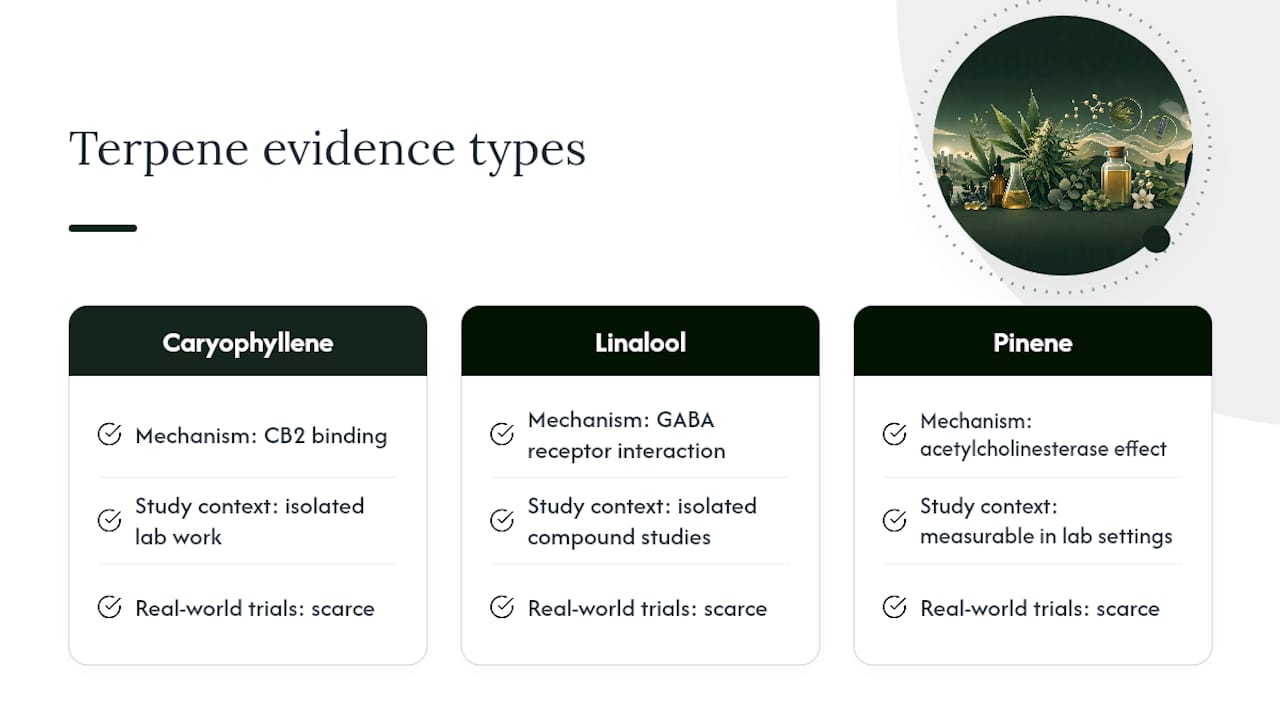
The entourage effect theory holds that terpenes and cannabinoids interact to produce effects neither produces alone. Some mechanisms behind it are real. Caryophyllene’s CB2 binding is documented. Linalool’s interaction with GABA receptors has been studied in isolation. Pinene’s effect on acetylcholinesterase is measurable in a lab setting.
None of that adds up to proof that smoking a limonene-heavy joint will reliably lift your mood, because rigorous human trials using cannabis-realistic doses and delivery methods are scarce. Lab studies use isolated compounds at concentrations that rarely match what you’d absorb from a bowl or vape session. That mismatch is the central weakness in most terpene marketing.
Meanwhile, sensory research has found that minor volatile sulfur compounds, present at tiny concentrations, can dominate what your nose actually perceives. The practical takeaway: use terpene data to predict smell and flavor with confidence. Use it for effect prediction only as an educated guess, not a prescription.
How to Read a Terpene Report Without Getting Fooled
Total terpene percentage tells you roughly how aromatic the batch is likely to be.
- Check for a batch-specific ID. A COA without one could belong to any harvest, not the jar in front of you.
- Confirm the lab used GC-MS methodology and holds real accreditation. Combining chemical analysis with a standardized sensory lexicon produces far more reliable quality data than terpene numbers alone.
- Note the test date versus the harvest date. A COA from three months ago may not reflect what’s in the jar today.
Pro Tip: Ask the seller for the harvest or cure date, not just the lab test date. Terpenes start declining the moment flower is cured, so a COA run right after harvest can overstate what you’ll actually smell weeks later.
Storing Flower So the Terpenes Survive
Heat, light, and oxygen are the three degraders that matter most, and monoterpenes go first since they’re the most volatile class. Research on cannabis volatile stability shows meaningful terpene loss within weeks under typical room conditions.
Avoid opening the jar constantly. Expect noticeable aroma decline within a few weeks to a couple of months even with good storage, so buy what you’ll actually use in that window.
Finding the Right Vape Temperature for the Terpene You Want
Every vaporizer heats slightly differently, so treat these as starting points, not universal law. Boiling-point data on individual terpenes supports a simple three-step ramp.
- 160°C to 175°C: releases the lightest monoterpenes first, good for a delicate flavor-forward opening hit.
- 176°C to 195°C: pulls limonene, linalool, and terpinolene into the vapor along with more cannabinoid content.
- Above 200°C: unlocks heavier sesquiterpenes and maximizes cannabinoid extraction, but you’re pushing toward degradation and, at the high end, combustion byproducts.
A simple session might run three or four minutes at each step, moving up only once the flavor from that stage fades. You trade some flavor nuance for potency the higher you climb.
Why We Built This Guide Around Lab Data, Not Marketing Copy
Every terpene claim in this guide gets checked against what the underlying compound actually does, not what a strain description promises. A curated menu around verifiable lab results is important, because a terpene percentage only means something when the certificate behind it is real and current. Strain education pages built from that same COA data, covering profiles like Cannalope Kush, exist so Alameda County shoppers can match aroma expectations to what’s actually in the jar before they order.
— Jake
Order Lab-Tested Flower With Terpene Data You Can Actually Check
Reading a terpene chart is one thing. Getting flower where the COA matches the jar is another problem entirely, and it’s the one Green On The Go was built to solve for Alameda County shoppers.

Licensed delivery services offer same-day delivery across Alameda County with curated menus of lab-tested flower, pre-rolls, vapes, and concentrates from trusted California brands. Products that tie back to verifiable lab results allow customers to check real numbers on terpene content rather than rely on marketing descriptions. Storage and vape temperature advice is best matched with products from a curated, COA-backed menu to avoid the guesswork of unverified listings.
Check your address on the delivery areas page or jump straight to your city, including Berkeley or Fremont, to see what’s in stock tonight.
Where This Information Comes From
The claims in this guide draw on preclinical receptor research, aroma chemistry studies, and practical terpene data rather than strain-card marketing. Key sources include Gertsch et al.'s CB2 binding study, research on minor volatile compounds in exotic cannabis aroma, GC-MS sensory lexicon methodology, and practical terpene range data from PhenoDB. For readers interested in how labs verify aromatic ingredient quality more broadly, this breakdown of GC/MS batch verification from Kejiwa Alchemy covers similar analytical principles applied to aromatherapy products.
This article is general information, not a substitute for advice from a qualified doctor. Consult a qualified healthcare professional about your own circumstances before acting on anything here.
Sources
Here’s the terpene lineup you’ll see on nearly every certificate of analysis, ranked by how often they show up and what’s actually known about them.
Myrcene smells earthy, musky, with a faint mango or clove edge. It’s the most abundant terpene in most commercial cannabis and shows up heavily in strains like Apple Mango Haze. Effect claims about myrcene and sedation are widespread online but rest almost entirely on rodent studies and anecdote, not controlled human trials.
Limonene brings bright citrus, orange peel, and lemon zest. Sativa-leaning cultivars lean on it heavily. Mood-lifting claims circulate constantly, but the human evidence is thin. Treat it as an aroma marker first.
Pinene smells like pine needles and fresh rosemary. It’s one of the few terpenes with a documented enzyme interaction, inhibiting acetylcholinesterase in lab studies, though that’s a mechanistic finding, not proof of a felt cognitive effect in cannabis users.
Linalool carries a floral, lavender note and appears in strains like Wedding Cake. Its GABAergic signaling has been studied in isolation, but not at the doses or delivery methods actual cannabis consumption involves.
Beta caryophyllene smells peppery, woody, almost clove-like, and shows up in Chem Reserve and similar heavier cultivars. This is the terpene with the clearest evidence: it binds selectively to CB2 receptors in preclinical research, making it the sole terpene with a demonstrated cannabinoid-receptor mechanism.
Humulene shares caryophyllene’s woody, happy character (it’s the same terpene that flavors beer) and usually rides shotgun with it in sesquiterpene-heavy strains.
Terpinolene is the odd one out: floral, herbal, with a slight citrus and pine hybrid quality. It dominates fewer strains but stands out sharply when it does, often reading as fresher or sharper than myrcene-forward flower.
Ocimene adds a sweet, woody, faintly herbal top note and rarely dominates a profile on its own, usually working as a supporting player that sharpens whatever terpene leads.
Beta caryophyllene is the only cannabis terpene with confirmed selective CB2 receptor binding in preclinical studies, per Gertsch et al.'s 2008 PNAS research. Every other effect claim tied to a specific terpene remains anecdotal or limited to animal and cell-based models.
One more wrinkle worth knowing: two strains can post nearly identical terpene percentages on their COAs and still smell completely different at the jar. Minor, nonterpenoid volatile compounds, including volatile sulfur compounds, often drive the sharpest citrus, tropical, or skunky notes in exotic cannabis, and standard terpene panels don’t test for them.
- PubMed: Gertsch et al. 2008 PNAS (β-caryophyllene CB2 agonist)
- GC–MS informed aroma profiling and sensory lexicon development for cannabis inflorescence (Chromatography Online, 2026)
- PhenoDB Cannabis terpenes guide
FAQ
What Are the Most Common Cannabis Terpenes?
Myrcene, limonene, pinene, linalool, caryophyllene, humulene, terpinolene, and ocimene appear most often on cannabis lab reports, with myrcene and limonene typically leading in commercial flower.
Does Beta Caryophyllene Actually Get You High?
No. It binds to CB2 receptors rather than CB1, which means it doesn’t produce intoxicating effects the way THC does, though preclinical research points to anti-inflammatory activity.
Can Terpene Percentages Predict How a Strain Will Make Me Feel?
Not reliably. Terpene data predicts aroma and flavor with real accuracy, but human evidence linking specific terpene ratios to specific effects remains limited to preclinical and mechanistic studies.
How Long Do Terpenes Last in Stored Flower?
Expect noticeable decline within weeks to a couple of months, even with proper storage, since monoterpenes are the most volatile class and degrade the fastest under heat and light exposure.
What Vape Temperature Preserves the Most Terpenes?
Starting around 160°C to 175°C preserves the lightest, most aromatic monoterpenes, while temperatures above 200°C extract more cannabinoids but push several terpenes toward thermal degradation.
How Can I Check if a Cannabis COA Is Trustworthy?
Look for a batch-specific ID, confirmation the lab used GC-MS testing methods, real lab accreditation, and a test date that reasonably lines up with the product’s harvest or cure date.
Recommended
Ready to order?
Licensed, same-day cannabis delivery across Oakland, Berkeley, Fremont and all of Alameda County.
Order Online