
60–90% Vapes vs 15–30% Flower: Lab Tested Safety in Alameda County
September 15, 2026
60–90% Vapes vs 15–30% Flower: Lab Tested Safety in Alameda County
Vaping wins on speed and strength. A JAMA crossover trial found vaporized cannabis hits blood THC peaks higher and faster than smoked flower at equal doses, while flower delivers a slower build and a longer, more rounded tail. The health trade-off: vaping skips most combustion byproducts, but device quality and cartridge sourcing matter more than most people realize.
TL;DR:
- Vaporized cannabis delivers significantly higher peak THC levels and stronger effects than smoked flower at the same dose, often with fewer toxic combustion byproducts.
- Vaping concentrates and cartridges typically contain 60 to 90 percent THC, while flower usually ranges from 15 to 30 percent, allowing for much more potent doses per pull.
- Switching from smoking to vaporizing can reduce exposure to harmful combustion toxicants, but only if products are sourced from licensed suppliers with verifiable lab testing.
- Vaping preserves more delicate terpenes at lower temperatures, leading to a cleaner flavor profile, whereas smoking produces a fuller, charred taste due to combustion.
- Heavy users find vaping more practical and discreet for quick, daytime dosing, but flower remains cheaper per gram and better suited for slower, ritualistic sessions.
Table of Contents
- What Matters Most When Choosing Between Vape and Flower
- How Does the High Differ Between Vaping and Smoking?
- Is Vaping Healthier Than Smoking Flower?
- How Do Terpenes and Flavor Differ Between Vaping and Smoking?
- What Are the Practical Trade-Offs Between Vape and Flower?
- How Should You Choose Between Vape and Flower?
- Our Take on Choosing Safely Between Vape and Flower
- Ready to Try Lab-Tested Vapes or Flower?
- Sources
- FAQ
What Matters Most When Choosing Between Vape and Flower
The differences boil down to a handful of practical factors, and most of them trace back to combustion versus heat-without-fire.
- Onset and intensity: vaping peaks faster and often harder; flower builds more gradually and evens out.
- Potency: cartridges and concentrates frequently run 60 to 90 percent THC or higher, while flower typically sits in the 15 to 30 percent range.
- Health: vaporizing avoids most combustion toxicants, but it isn’t risk-free. Illicit cartridges drove the EVALI outbreak, not dry-herb devices.
- Flavor: vaping preserves terpenes at lower temperatures; smoking produces a fuller, more charred flavor profile.
- Practicality: vapes are more discreet and deliver more THC per milligram consumed; flower is cheaper per gram and carries a ritual weight that vaping doesn’t replicate.
How Does the High Differ Between Vaping and Smoking?
The pharmacokinetics explain a lot of what consumers notice but can’t always articulate. In a controlled crossover study of 17 infrequent cannabis users, vaporized cannabis produced higher peak blood THC concentrations and stronger subjective drug effects than the same dose smoked. Johns Hopkins Medicine researchers reported the same pattern: vaping delivered noticeably stronger effects than smoking, even when the dose was matched.
Part of the reason is simple efficiency. Vaporizers lose less THC to sidestream smoke and incomplete combustion, so more of what you inhale actually reaches your bloodstream. Smoking a joint burns off a share of the cannabinoids before they ever get to your lungs.
Potency compounds the effect. Flower runs in a fairly predictable band, while cartridges and distillates concentrate cannabinoids far beyond what raw plant material contains.
| Product type | Typical THC range | Practical dosing note |
|---|---|---|
| Dried flower | 15% to 30% | Small puffs, gradual buildup, easier to gauge in real time |
| Vape cartridge / distillate | 60% to 90%+ | One small pull can equal several hits of flower |
The vape high vs flower high distinction really comes down to control. With flower, you’re titrating dose one puff at a time over minutes. With a vape, a single two-second pull can deliver a dose that would take three or four hits of flower to match, which is exactly why new users get caught off guard.
Pro Tip: If you’re new to vaping or trying an unfamiliar cartridge, take one small pull and wait at least 10 minutes before taking another. With flower, space hits out by a few minutes each to gauge how you’re feeling before you keep going.
Is Vaping Healthier Than Smoking Flower?
The chemistry starts with heat. Combustion, the process of burning flower to smoke it, occurs at temperatures exceeding 600 to 900 degrees Celsius, hot enough to produce carbon monoxide, tar, and polycyclic aromatic hydrocarbons. Vaporizers built for dry herb typically run between 160 and 230 degrees Celsius, a range that releases cannabinoids and terpenes without setting the plant material on fire.
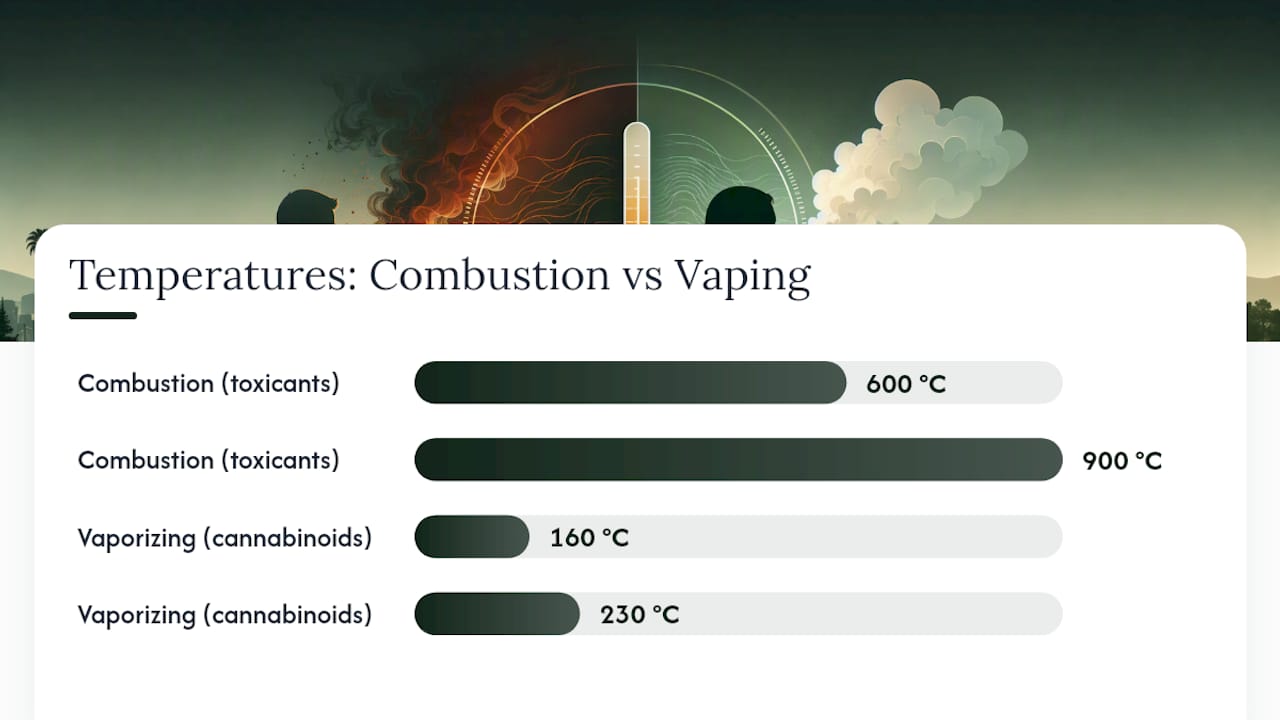
That temperature gap is why regulators and researchers keep circling back to vaping as a potential harm-reduction tool rather than a cure-all. A systematic review of cannabis and cannabis vaping health effects found that switching from smoking to vaporizing tends to reduce exposure to combustion toxicants, and short-term observational data point to fewer respiratory symptoms among people who make the switch. Long-term randomized trials are still thin, so “healthier” is a directional claim, not a guarantee.
EVALI complicates the picture, but it’s often misunderstood. The 2019-2020 outbreak of vaping-associated lung injury was linked overwhelmingly to illicit THC cartridges cut with vitamin E acetate, not to regulated dry-herb vaporizers or licensed cartridge products. Dry-herb vaping and legally sourced cartridges carry a genuinely different risk profile than the black-market products behind those cases.
A few habits reduce your exposure regardless of which method you choose:
- Buy only lab-tested products with a certificate of analysis (COA) you can actually view.
- Skip any cartridge without traceable manufacturing and testing records.
- Avoid black-market vape products entirely. Vitamin E acetate doesn’t show up in regulated supply chains.
- Wait at least six hours before driving after using either method, per the Lower-Risk Cannabis Use Guidelines cited in that same review.
How Do Terpenes and Flavor Differ Between Vaping and Smoking?
Terpenes are the aromatic compounds that give each strain its distinct smell and flavor, and they’re fragile. Most start breaking down well below combustion temperatures, which is why a joint tastes smoky and heavy while a vape hit tastes like the actual strain.
Laboratory testing backs this up: terpene preservation improves substantially at lower vaporization temperatures, roughly in the 160 to 195 degree Celsius range, while combustion destroys a large share of those same compounds. That’s the mechanical reason vaping tends to taste “cleaner” and more strain-specific.
- Vaping preserves delicate citrus, floral, and pine notes that smoking tends to flatten into a generic charred taste.
- Smoking produces a fuller, more complex mouthfeel that plenty of longtime consumers actually prefer.
- Terpene-forward strains like the Wedding Cake strain show up more distinctly in vapor form.
- Social sessions, tastings, and slower ceremonies still favor flower and its shared ritual.
What Are the Practical Trade-Offs Between Vape and Flower?
Odor is the first thing most people notice. Vapor dissipates within minutes, while smoke clings to fabric, hair, and furniture for hours. For renters or anyone sharing space, that difference alone often settles the debate.
Cost works differently depending on how you calculate it. Flower is cheaper per gram at checkout, but vaporization extracts roughly 50 to 80 percent of available cannabinoids compared with 25 to 30 percent for combustion. A quality dry-herb vaporizer costs more upfront, but heavy users often recoup that difference within a few months through lower overall consumption.
- Vapes need charging, occasional cleaning, and cartridge disposal, while flower just needs a grinder and rolling papers.
- Already vaped bud (AVB) can be repurposed into edibles instead of thrown away.
- Counterfeit cartridges are a real risk category that flower simply doesn’t carry.
- Quick daytime dosing, travel, and discretion favor vapes; home sessions and cost-conscious heavy use favor flower.
How Should You Choose Between Vape and Flower?
Start with what you actually need from the experience, then work backward to the product.
- Decide on onset and duration. Want something fast that fades in an hour or two? Vape. Want a longer, slower arc? Flower.
- Factor in respiratory history. Anyone with asthma or lung sensitivity should lean toward vaporizing over smoking, per the health effects review.
- Check your tolerance. New or infrequent users should treat vape cartridges with real caution given how much stronger they hit.
- Weigh discretion needs. If odor is a dealbreaker, vaping is the clear answer.
- Set a budget. Heavy, cost-sensitive users often do better with flower long term.
When buying either product, ask these questions before you commit:
- Is there a lab certificate of analysis (COA) available for this exact batch?
- What’s the THC percentage, and what counts as a standard serving?
- Was this vape cartridge made under licensed manufacturing standards?
- Who’s the licensed distributor, and can I verify it?
Red flags include missing COAs, vague or unlisted ingredients, cartridges priced suspiciously below market rate, and any vendor pushing off-market brands you can’t verify.
Pro Tip: Trying something new? Start with one small dose and wait. Vape onset hits fast and can catch you off guard if you go in expecting flower’s slower ramp.
Our Take on Choosing Safely Between Vape and Flower
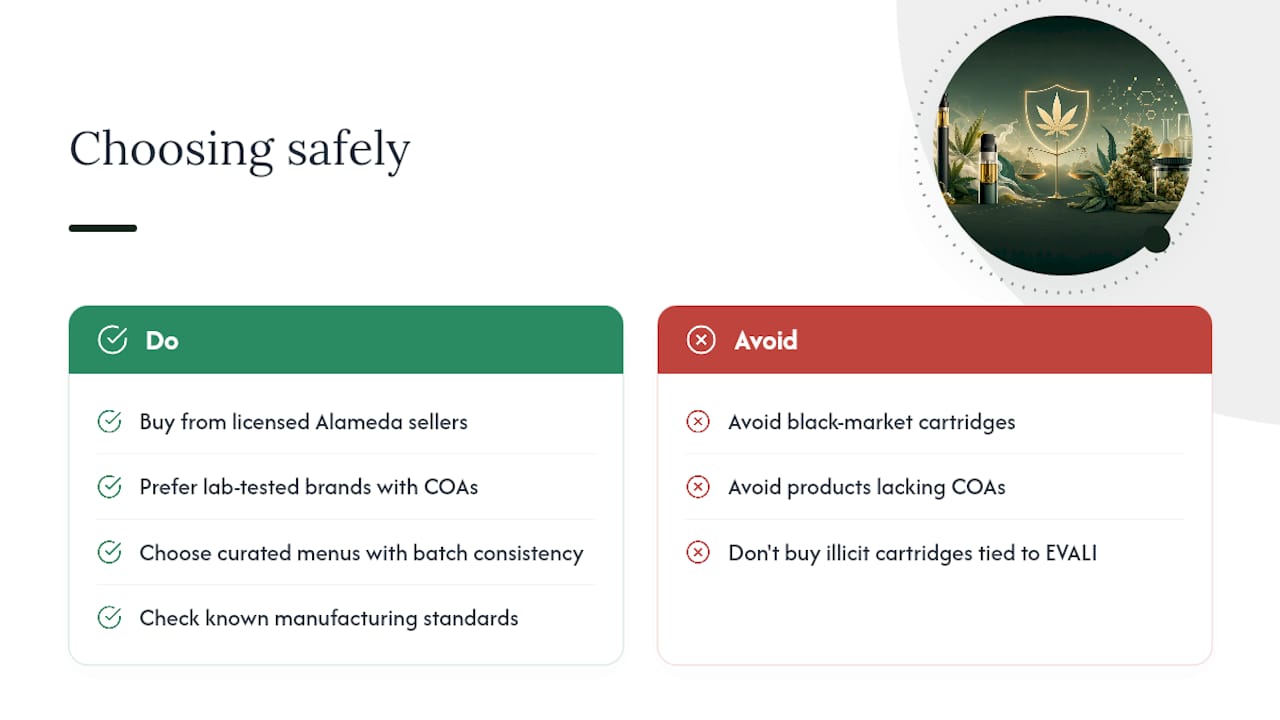
Most of the “vape versus flower” debate online skips the part that actually protects you: where the product came from. Some services build their curated menus around trusted, lab-tested brands, with batch consistency verified through a legal supply chain rather than a guess.
That matters because the safety checklist in this guide, verified COAs, known manufacturing standards, no black-market cartridges, isn’t optional advice. It’s the actual difference between a regulated dry-herb vape and the illicit products tied to EVALI. Buying from a licensed source in Alameda County closes that gap before you ever take a pull.
— Jake
Ready to Try Lab-Tested Vapes or Flower?
Once you know the trade-offs, the real question is where to actually get product you can trust. There are alternatives to guessing at gas-station cartridges or unverified online listings: some menus offer lab-tested products sourced through legal supply chains, backed by verifiable results you can check before you buy.

Whether you’re leaning toward a fast-acting vape or a slower flower session, you can browse the curated menu and check same-day delivery areas across Alameda County to see what’s available near you today. If you’re in the East Bay, same-day options extend to Berkeley and several nearby cities, with knowledgeable local drivers handling the delivery end so you don’t have to.
This article is general information, not a substitute for advice from a qualified doctor. Consult a qualified healthcare professional about your own circumstances before acting on anything here.
Sources
- Acute effects of smoked and vaporized cannabis in healthy adults who infrequently use cannabis: A crossover trial | JAMA Network Open
- Review: Health effects of cannabis and cannabis vaping (PMC)
- Vaping cannabis produces stronger effects than smoking cannabis for infrequent users (Johns Hopkins Medicine)
- Vaporizing vs Smoking — Vaporizer guide (Camouflet)
FAQ
Is Vaping Stronger Than Smoking Flower?
Yes. A controlled crossover trial found vaporized cannabis produced higher peak blood THC and stronger subjective effects than smoked cannabis at the same dose.
Is Vaping Healthier Than Smoking?
Vaping tends to reduce exposure to combustion toxicants like tar and carbon monoxide, but it isn’t risk-free, and long-term studies are still limited according to current health reviews.
What Caused EVALI, and Does It Apply to Regulated Vapes?
EVALI was linked primarily to illicit THC cartridges containing vitamin E acetate, not to regulated dry-herb vaporizers or licensed, lab-tested cartridge products.
Why Does Flower Taste Different From Vape?
Vaporizing preserves more terpenes because it heats cannabis at lower temperatures, while smoking’s combustion destroys many of those same aromatic compounds.
How Do I Know a Vape or Flower Product Is Safe?
Check for a certificate of analysis (COA) from the specific batch, confirm licensed manufacturing standards, and buy only through a legal, traceable supply chain used for products on the menu.
Recommended
Ready to order?
Licensed, same-day cannabis delivery across Oakland, Berkeley, Fremont and all of Alameda County.
Order Online