
Terpene Sleep Strains for Alameda County: Lab Tested Same Day Delivery
September 18, 2026
Terpene Sleep Strains for Alameda County: Lab Tested Same Day Delivery
Indica-leaning strains rich in myrcene and linalool are the most consistently reported option for helping people fall and stay asleep, though results vary by person. Start with 10 to 15 mg of CBD taken one to two hours before bed, and only add 1 to 2.5 mg of THC if that alone isn’t enough. The specific strain matters less than its terpene content, and the annotated list below breaks down which ones fit which kind of sleep problem.
TL;DR:
- Strains rich in myrcene and linalool are most effective for sleep, especially when tailored to specific issues like falling asleep or staying asleep.
- Checking a strain’s terpene profile and batch-specific lab results is essential, as the same strain from different growers can vary widely in composition.
- Matching the strain’s chemotype to the sleep problem—such as onset, maintenance, or pain-driven issues—improves success chances.
- CBD-first dosing of 10 to 15 mg with an optional small THC addition is recommended, with a trial period of two to four weeks before evaluation.
- Use delivery methods suited to your sleep issue: vaping for quick onset, sublingual oils for longer coverage, and edibles for overnight use.
Table of Contents
- The Best Strains for Sleep, Ranked by What They Actually Do
- How to Match a Strain to Your Specific Sleep Problem
- Dosing Guidance and Safety Warnings You Shouldn’t Skip
- How to Verify a Strain Is Actually Safe Before You Buy It
- An Editorial Take: Cannabis Is a Tool, Not the Whole Plan
- Get Lab-Tested Sleep Strains Delivered the Same Day
- Sources
- FAQ
The Best Strains for Sleep, Ranked by What They Actually Do
Not every “sleepy” strain solves the same problem. Some knock you out fast and wear off by 2 a.m. Others build slowly and keep you under until morning. Chemotype and terpene content, not the indica/sativa label alone, predict which is which, according to a terpene-focused review of sleep-oriented cannabis. Here’s how the most commonly recommended strains break down.
- Northern Lights. A myrcene-forward classic with THC typically in a moderate percentage range. Best for people who struggle to fall asleep in the first place. Onset within 10 to 15 minutes if inhaled, effects lasting 2 to 3 hours.
- Bubba Kush. Heavy on myrcene and caryophyllene, which makes it a solid pick if pain or muscle tension is what’s keeping you up. THC usually runs at a moderate level. Works well as a sublingual oil for longer coverage overnight.
- Granddaddy Purple. One of the most reliably sedating indicas on the market, with linalool adding a calming, almost floral edge that helps with racing thoughts. THC often sits at a moderate level. Better for staying asleep than falling asleep quickly.
- Deep Sleep (sometimes labeled PO #4). Bred specifically for nighttime use, with a myrcene and linalool combination aimed at both onset and sleep maintenance. Look for balanced THC in the high teens with modest CBD.
- Purple Punch. A dessert-leaning indica with grape and berry notes; myrcene dominant, moderate THC at a typical level. Good middle-ground option for people newer to nighttime cannabis use.
- Mendo Breath. A cross known for heavy sedation and appetite stimulation, useful for insomnia tied to nausea or appetite loss. THC can be relatively high, so dose conservatively.
- High-myrcene “very sedating” cultivars (sometimes marketed under names like Nightfire-type crosses). These lean hard into sedation over flavor complexity and are worth trying if lighter indicas haven’t done the job.
- Balanced hybrids with caryophyllene emphasis, useful specifically when pain is the root cause of poor sleep rather than anxiety or racing thoughts.
Batch variability is real. The same strain name from two different growers can test wildly different on terpene content, so check the certificate of analysis (COA) every time, not just the strain name on the jar. If you want to see what a detailed strain profile actually looks like, the Blue Dream strain guide shows the level of terpene and cannabinoid detail worth looking for before you buy.
How to Match a Strain to Your Specific Sleep Problem
Picking blindly off a “best for sleep” list skips the step that actually matters: figuring out what’s broken in your sleep in the first place.
Step 1: Name your problem. Are you lying awake for 45 minutes before you drift off? Waking at 3 a.m. and staring at the ceiling? Or is pain or anxiety the real culprit, with sleep loss just the symptom? Each of these points to a different chemotype.
Step 2: Match chemotype and terpenes to that problem. Type I strains (THC-dominant) with high myrcene and linalool tend to help with sleep onset. Type III strains (CBD-dominant or balanced) with caryophyllene work better when pain is the underlying driver, since caryophyllene has documented anti-inflammatory activity in preclinical models. If anxiety keeps you wired at bedtime, linalool-heavy chemovars tend to calm racing thoughts faster than pure sedation alone.
Step 3: Factor in tolerance and medications. If you take SSRIs or benzodiazepines, talk to a prescribing clinician before adding cannabis. Combining sedatives with THC can amplify drowsiness in unpredictable ways, and public-health guidance on marijuana risks flags certain populations, including people with a history of psychosis, as needing to avoid it altogether.
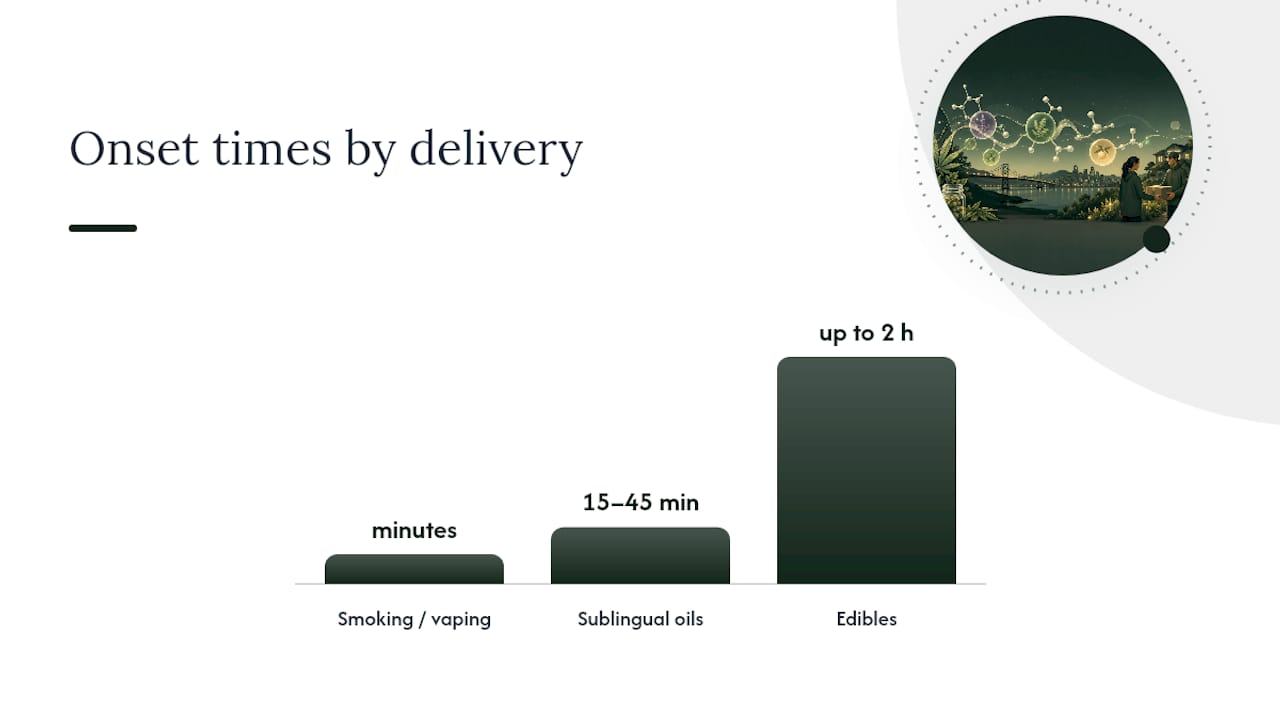
Step 4: Choose delivery and timing around your actual problem. Smoking or vaping hits in minutes but fades in two to three hours, useful for onset issues. Sublingual oils take 15 to 45 minutes and last longer, good for staying asleep. Edibles take up to two hours to kick in but can carry you through the whole night.
Quick checklist before you buy:
- Define whether your issue is onset, maintenance, or pain-driven.
- Pick a chemotype and terpene profile that matches it.
- Check for medication interactions.
- Choose a delivery method that fits your timeline.
- Confirm the COA before committing to a new strain.
Pro Tip: Keep a simple sleep log for two weeks, noting strain, dose, and how you slept. Patterns show up fast, and they’ll save you money on trial and error.
Dosing Guidance and Safety Warnings You Shouldn’t Skip
Start low and go slow. Take 10 to 15 mg of CBD one to two hours before bed, and add only 1 to 2.5 mg of THC if the CBD alone isn’t cutting it, guidance echoed by sleep experts interviewed in the Boston Globe. Give any new routine two to four weeks before deciding whether it’s working.
Clinical Snapshot: A randomized, double-blind crossover trial found mixed-cannabinoid formulations improved Insomnia Severity Index scores by roughly 5 points versus placebo, a meaningful shift for a standard clinical scale. A separate 2024 randomized trial of nightly 150 mg CBD dosing also showed improvement in participants with moderate to severe insomnia.
Delivery method carries its own risks. Smoking and vaping expose your lungs to combustion byproducts; edibles have delayed, unpredictable onset that leads people to redose too soon. Avoid cannabis entirely if you’re pregnant or breastfeeding, have a personal or family history of psychosis, or manage severe cardiovascular or liver disease. If you’re on SSRIs or benzodiazepines, loop in your prescriber first. Regular high-THC use can also build tolerance quickly, and observational research links heavier THC-dominant use to worse sleep quality over time in some users, so periodic breaks matter more than most people realize.
How to Verify a Strain Is Actually Safe Before You Buy It
A certificate of analysis tells you three things that matter for sleep-oriented purchases: the cannabinoid profile (how much THC and CBD you’re actually getting), the terpene breakdown (whether myrcene or linalool is really present in meaningful amounts), and contaminant screening for pesticides, heavy metals, and mold.
Before ordering a new strain, run through this:
- Confirm the COA is batch-specific, not a generic strain average.
- Verify the product moved through a licensed supply chain.
- Look for clear percentage labels on both cannabinoids and dominant terpenes.
- Favor oils, capsules, or pre-measured formats when precise dosing matters more than ritual.
Every product moves through a licensed supply chain with verifiable lab results, and curated menus often feature batch-consistent options from established California brands. Pro Tip: Ask customer support to send you the COA for a strain before you order it, especially the first time. A legitimate, lab-tested seller will have it ready in minutes.
An Editorial Take: Cannabis Is a Tool, Not the Whole Plan
Cannabis genuinely helps a lot of people fall and stay asleep, and the terpene research backs that up. But leaning on high-THC strains every single night invites tolerance, and tolerance quietly erodes the exact effect you’re chasing. Pair a sleep strain with real sleep hygiene, consistent bedtime, less screen time, a cooler room, and track what actually works for you over a few weeks. If insomnia persists despite all that, see a clinician before assuming a stronger strain is the fix.
— Jake
Get Lab-Tested Sleep Strains Delivered the Same Day
Reading terpene labels and comparing COAs takes real effort when you’re already exhausted and just want something that works tonight. Greenonthegodelivery cuts that research time down by curating trusted brands like STIIIZY and Buddies with verifiable lab results attached to every batch, so you’re not guessing whether the “Granddaddy Purple” you ordered actually has the terpene profile it claims.

Every product moves through a fully licensed supply chain with lab results you can actually check, and local drivers cover cities across Alameda County, including Oakland and Berkeley, same day. Browse the cannabis strain guide to compare terpene profiles before you commit, or head straight to order online and get a sleep-focused pick delivered to your door tonight.
Sources
- Best strains and terpenes for sleep (terpene-focused review / Cannigma)
- Can marijuana help you sleep? Here’s what to know. (Boston Globe)
This article is general information, not a substitute for advice from a qualified doctor. Consult a qualified healthcare professional about your own circumstances before acting on anything here.
FAQ
What home remedies help you fall asleep quickly?
A consistent bedtime, a cool dark room, and cutting screens an hour before bed are the basics that make any sleep aid work better. Many people pair those habits with a fast-onset method like an indica flower or vape rather than relying on the remedy alone.
How do you stay asleep all night?
Staying asleep usually calls for a longer-acting delivery method, like a sublingual oil or edible, rather than something smoked or vaped that wears off in a few hours. Strains high in linalool, like Granddaddy Purple, are commonly chosen for maintaining sleep rather than just falling asleep fast.
Which cannabinoid is best for insomnia?
Both CBD and THC show benefits in clinical research, but the recommended approach is CBD first. A 2024 randomized trial found nightly 150 mg CBD improved sleep in people with moderate to severe insomnia, and adding small amounts of THC only if CBD alone isn’t enough.
Does sativa or indica help you fall asleep better?
Indica-leaning strains are more commonly associated with sedation, but the label matters less than the terpene content inside the specific batch. A terpene-focused review found myrcene and linalool levels predict sedative effects more reliably than the indica or sativa category alone.
What strains does Greenonthegodelivery carry for sleep?
Greenonthegodelivery’s curated menu includes indica-leaning, terpene-rich options from established California brands, with batch-specific lab results available for every product. Current selection and pricing are available on the order page.
Recommended
Ready to order?
Licensed, same-day cannabis delivery across Oakland, Berkeley, Fremont and all of Alameda County.
Order Online