
Low Dose Edibles: Find Your 1 to 2.5 mg in 2–3 Trials for Beginners
September 6, 2026
Low Dose Edibles: Find Your 1 to 2.5 mg in 2–3 Trials for Beginners
Low-dose edibles typically contain 1 to 5 mg of THC per serving, with most beginners doing best at 1 to 2.5 mg. The core rule is simple: start low, wait at least 90 minutes, and go slow before deciding you need more. Common formats include gummies, mints, and drinks, all built specifically for this kind of careful, controlled dosing.
TL;DR:
- Microdoses usually contain 1 to 2.5 mg of THC, with 2.5 to 5 mg being the typical low dose targeted for beginners.
- Absorption and effects can vary widely based on food, metabolism, age, and medication, making precise dosing unpredictable.
- Waiting 60 to 90 minutes after ingestion is crucial before considering re-dosing, as effects peak around this time.
- Lab-tested, clearly labeled products with batch numbers and Certificates of Analysis significantly reduce risks for first-time users.
- Consistently repeating the same dose across trials helps accurately find your ideal low dose while minimizing adverse effects.
Table of Contents
- What Counts as Low-Dose vs. Microdose Cannabis Edibles?
- How Do Low-Dose Edibles Actually Work in the Body?
- How Do You Find Your Ideal Low Dose?
- Which Low-Dose Format Is Right for You?
- How Do You Read Labels and Spot a Bad Edible?
- What Should You Do If You Take Too Much?
- Why Lab Testing and Curated Menus Matter for New Users
- Where to Verify Dosing and Safety Information
- The Trial Method Beats the Guessing Game
- Ready to Try Low-Dose Edibles the Right Way?
- Sources
What Counts as Low-Dose vs. Microdose Cannabis Edibles?
The cannabis industry generally sorts THC edibles into three tiers, and knowing which one you’re holding matters more than most people realize before their first bite.
A microdose sits at 1 to 2.5 mg of THC, often too subtle to notice unless you’re paying close attention. A low dose runs roughly 2.5 to 5 mg, the range most beginner-labeled products target. Anything at 10 mg or above counts as a standard dose, which is the amount a lot of older gummy packs still default to, sometimes to a new user’s surprise.
Here’s what each tier tends to feel like in practice:
- 1 to 2.5 mg (microdose): Mild relaxation, maybe a slight mood lift, minimal impairment. Some people report almost nothing on their first try.
- 2.5 to 5 mg (low dose): Noticeable calm, mild euphoria, possible light appetite increase, still functional for most everyday tasks.
- 10 mg (standard dose): Stronger body relaxation, potential drowsiness or anxiety in sensitive users, meaningfully impaired coordination and focus.
- 20 mg and up: Reserved for experienced users with established tolerance, not a starting point for anyone new.
Individual variability throws a wrench into all of this. Body weight, metabolism, and how your endocannabinoid system processes THC all shift where you land on that spectrum, which is why pharmacology research points to such a wide range of responses to identical doses. Someone who eats infrequently and weighs less might feel 5 mg the way another person feels 10. That’s not a flaw in the product. It’s just biology doing its own thing.
How Do Low-Dose Edibles Actually Work in the Body?
Edibles take a slower, more roundabout path through your system than smoking or vaping, and that path is exactly why dosing mistakes happen so often.
When you eat a standard edible, THC travels through your digestive tract and liver before reaching your bloodstream, a process that typically takes 60 to 90 minutes to produce noticeable effects. Some newer products use nanoemulsion technology, which breaks THC into smaller particles that absorb faster, sometimes producing effects in 15 to 30 minutes. Both formats deliver similar total effects, but the timing difference explains a lot of the “I didn’t feel anything, so I ate another one” mistakes that land people in emergency rooms.
Four factors shift your timeline the most:
- Stomach contents. Eating on an empty stomach speeds absorption; a heavy meal beforehand slows and sometimes reduces it.
- Metabolism. Faster metabolic rates tend to process THC quicker, though this varies person to person.
- Age. Older adults often process cannabinoids more slowly, extending both onset and duration.
- Medications. Certain drugs compete with THC for the same liver enzymes, changing how strong or long the effects run.
Pro Tip: Set an actual timer on your phone the moment you take your first bite. “I’ll just wait a bit” turns into 40 minutes way faster than you’d think, and that’s exactly the window where people redose too soon.
At low doses, peak effects usually land around the 90 minute mark and taper off within 4 to 6 hours. Leafly’s dosing guidance recommends waiting a full 60 to 90 minutes, sometimes up to 120, before even considering more. That patience is the entire game.
How Do You Find Your Ideal Low Dose?
Finding your personal sweet spot isn’t a one-time experiment. It’s a short series of controlled trials, and treating it that way saves you from both wasted product and an unpleasant night.
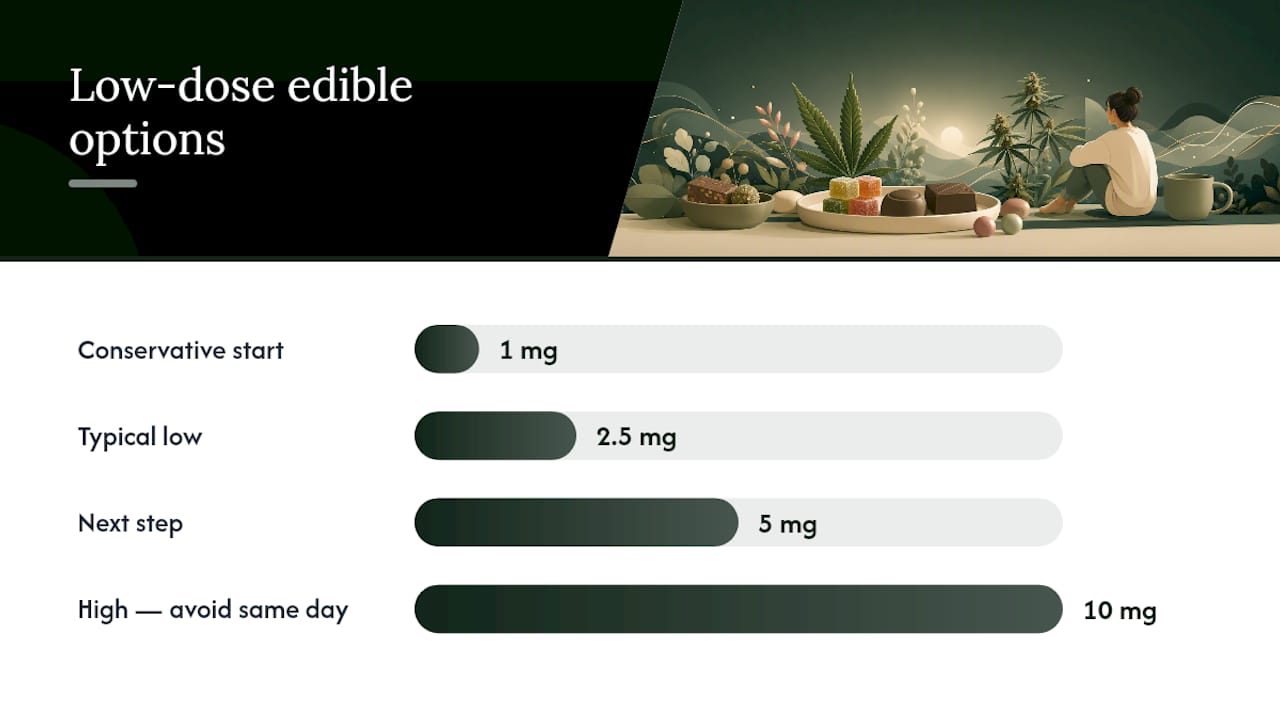
- Pick a pre-dosed product. Choose something clearly labeled at 1 mg, 2.5 mg, or 5 mg per piece rather than trying to eyeball a fraction of a larger dose.
- Start conservative. First-timers should default to 1 to 2.5 mg Kratom Dose for Beginners, Check Lab Reports, even if a friend swears their tolerance lets them handle more.
- Set your timer and observe. Give it the full 90 minute window, minimum, before judging anything.
- Track what happens. Note mood, body sensation, appetite, and any anxiety on a simple scale of 1 to 5. A notes app works fine.
- Repeat the same dose, same time of day, for 2 to 3 sessions. This is the part most beginners skip, and it’s the most important step.
- Only then increase, gradually. If three trials at 2.5 mg feel too mild, step up to 5 mg next time. Never jump straight to 10 mg or more.
Repeating the identical dose across separate days, rather than adjusting after just one try, removes a lot of the noise: what you ate that day, how tired you were, whether you were stressed. That consistency is what actually tells you if a dose works for you.
One rule that trips people up constantly: if you feel nothing after your first low dose, do not take more that same day. Cannabis dosing guidance is specific on this point. Wait until your next scheduled trial, ideally the following day, and try the same amount again. Redosing same-day risks stacking a second dose on top of a delayed first one, which can produce a much stronger effect than you intended, right when you least expect it.
Which Low-Dose Format Is Right for You?
Not every low-dose product behaves the same way once it’s in your system, and picking the right format matters almost as much as picking the right milligram count.
- Gummies: The most common starter format, typically 60 to 90 minute onset, easy to find pre-dosed at 2.5 or 5 mg. Downside: cutting one in half to hit a smaller dose is imprecise and easy to get wrong.
- Mints and tablets: Often dosed at exactly 1 or 2.5 mg each, which makes them genuinely stackable. Take one, wait, take another only if needed. This precision is a big reason editorial reviews of low-potency products single out pre-dosed mints as a strong beginner pick.
- Tinctures and drops: Sublingual absorption (held under the tongue) can kick in faster than swallowed edibles, sometimes 15 to 45 minutes, and droppers allow fine-tuned dosing by the milliliter.
- Beverages: Often built on nanoemulsion tech for faster onset, usually 20 to 40 minutes, appealing if you want something that feels more social than a gummy.
- Chocolates: Easy to break into small pieces, though uneven THC distribution across a bar can make splitting less reliable than a factory-dosed gummy or mint.
If anxiety is a concern, a CBD:THC blend, something like a 1:1 or 2:1 ratio, tends to soften THC’s edge for a lot of first-timers. THC-only products make more sense once you already know how your body responds and want a cleaner, more predictable low-dose experience.
How Do You Read Labels and Spot a Bad Edible?
A responsibly made low-dose edible tells you everything on the package before you even open it. If it doesn’t, that’s your first warning sign.
Legitimate labels list total THC per piece, the number of pieces per package, total THC for the whole package, CBD content if present, and a batch number tying that specific product back to its lab results. That batch number is your ticket to the Certificate of Analysis, or COA, which independent labs generate to verify potency and screen for pesticides, heavy metals, and residual solvents left over from extraction.
A few things should make you put a product back on the shelf:
- No milligram dosing information anywhere on the package.
- No batch number or QR code linking to a COA.
- Packaging that looks like candy marketed to kids, which several states now restrict specifically because of consumer-safety concerns raised under frameworks like California’s Proposition 65 cannabis warnings.
- Sold by an unlicensed seller with no verifiable supply chain.
Check allergen statements too. Chocolate and nut-based edibles carry the same allergen risks as any other food product, and a legitimate label discloses them clearly.
What Should You Do If You Take Too Much?
Taking too much of a low-dose edible isn’t usually dangerous, but it can feel genuinely awful for a few hours, and knowing what to do calms things down faster.
If you’ve overdone it, stay in a safe, familiar space and remind yourself the feeling is temporary. Hydrate. Some people find that a dose of CBD helps counteract THC’s intensity, though results vary. If symptoms feel severe, racing heart, extreme paranoia, vomiting, don’t hesitate to call for medical help; you won’t get in trouble for seeking care.
Interactions matter just as much as dose size. Combining edibles with alcohol or sedatives amplifies impairment unpredictably, and certain prescription medications processed through the liver’s CYP450 enzyme system can change how strong or long THC’s effects last. The CDC’s cannabis overview recommends checking with a clinician before mixing cannabis with other medications, especially if you’re on anything metabolized by the liver.
A few non-negotiables beyond the high itself:
- Store edibles in a locked container, out of sight and reach of children and pets.
- Never drive or operate machinery after consuming, even at low doses; impairment can outlast the obvious “high” feeling, as state safety guidance makes clear.
- Check your employer’s policy before consuming if drug testing applies to your job.
Why Lab Testing and Curated Menus Matter for New Users
Beginners face a specific risk that experienced users don’t: they can’t yet tell the difference between “this dose feels off” and “this product is mislabeled.” That gap is exactly why sourcing matters as much as dosing math.
A licensed cannabis delivery service in Alameda County, California, can provide a curated menu featuring established brands with products moving through a legal supply chain and accompanied by verifiable lab results, so the milligram count on the label reflects the actual amount. For communities like Oakland and Berkeley, consistent delivery by local drivers familiar with the area helps remove much of the guesswork beginners face when trusting a first purchase.
Where to Verify Dosing and Safety Information
For readers who want to check claims themselves, Leafly’s dosing chart breaks down milligram tiers in detail, and the CDC’s cannabis page covers general health effects and interaction risks. Colorado’s Marijuana Enforcement Division offers solid storage and safety practices that apply regardless of where you live, and California’s Proposition 65 cannabis notices explain labeling requirements relevant to products sold in the state. Always check your own state’s laws and the specific product’s lab results before you buy.
The Trial Method Beats the Guessing Game
Most edible guidance out there tells you to “start low and go slow” and then leaves you to figure out what that actually means in practice. That’s the gap I think matters most: low is a number, not a feeling, and slow needs a defined stopping point, or people just keep upping their dose after one underwhelming try.
The repeat-trial method, same dose, same time of day, for two or three sessions before you touch the number again, is the part conventional advice usually skips. It’s not exciting advice. It’s also the only method that actually isolates your dose from everything else going on that day: what you ate, how tired you were, whether you were anxious already.
The other piece people underrate is sourcing. A perfect dosing protocol means nothing if the gummy in front of you doesn’t contain what the label claims. That’s where lab testing and a curated, verified menu stop being a nice feature and start being the foundation the whole protocol depends on. Get the sourcing right first. Then let patience do the rest.
— Jake
Ready to Try Low-Dose Edibles the Right Way?
Guesswork is the biggest risk with low-dose edibles, not the THC itself. This service pairs a curated menu of trusted brands with verifiable lab results on every product, so the milligram count you plan around is the milligram count you actually get delivered.

That matters most for anyone in Oakland, Berkeley, or elsewhere in Alameda County who’s still building trust in a first low-dose purchase. Instead of piecing together dosing charts and hoping a random dispensary shelf matches them, you get same-day delivery from local drivers who know the area and a menu built specifically around consistency, batch to batch. If you’re ready to find your starting dose with a product you can actually verify, check same-day delivery across Alameda County and see what’s available at your door today.
This article is general information, not a substitute for advice from a qualified doctor. Consult a qualified healthcare professional about your own circumstances before acting on anything here.
Sources
- Edible dosing for beginners: With dosage chart by milligrams | Leafly
- Safety with edibles | Colorado Marijuana Enforcement Division
- Proposition 65: Cannabis
- About cannabis | CDC
- Best THC Gummies: Editor-Tested and Ranked by Vibes | VICE
Recommended
Ready to order?
Licensed, same-day cannabis delivery across Oakland, Berkeley, Fremont and all of Alameda County.
Order Online