
Save Your $40 Vape Cartridge From Leaking, Licensed Delivery Pro Tips
September 11, 2026
Save Your $40 Vape Cartridge From Leaking, Licensed Delivery Pro Tips
A leaking cartridge is oil escaping through a gap it should never reach: a failed seal, an overfilled chamber, or oil thinned out by heat and pressure. The fix starts before you troubleshoot anything else. Stop pulling on it, unscrew the cartridge from the battery, set it upright, and wipe the battery threads clean before you touch it again.
TL;DR:
- Temperature fluctuations cause oil viscosity changes, making it more likely to leak from seals or hardware flaws during hot or cold conditions.
- Hardware failures such as worn seals, cracks, misaligned threads, or a bent center pin are common sources of leaks, especially after drops or overtightening.
- Proper handling, storage upright at room temperature, and using low-voltage settings significantly reduce leak risks and hardware damage.
- Cleaning connections, warming thickened oil gently, and avoiding thinning agents are immediate fixes for leaks and clogs, but cracked tanks require replacing.
- Buying lab-tested cartridges from reputable sources with matching viscosity specifications prevents many leaks caused by manufacturing shortcuts or hardware incompatibility.
Table of Contents
- What Causes a Leaking Vape Cartridge?
- Diagnose It: Is It Leaking, Clogged, or Both?
- How to Fix a Leaking Vape Cartridge Right Now
- How to Prevent Vape Cartridge Leaking Before It Starts
- What Professional Delivery Handling Teaches About Leak Prevention
- When to Fix It Yourself and When to Just Replace It
- Get a Reliable Replacement Cartridge, Delivered Same Day
- Sources
- FAQ
What Causes a Leaking Vape Cartridge?
Every leaking vape cartridge comes down to one of two failures: the oil got too thin to stay put, or something in the hardware gave it a path out. Usually it’s both at once.
Cannabis oil’s viscosity depends heavily on terpene content, and terpenes are extremely sensitive to temperature. Oil that sits perfectly still at room temperature can turn watery in a hot car or a sunny window, and thin oil finds its way past seals that would have held it fine when cold. Go the other direction, oil that gets too cold and thick, and you get the opposite complaint: clogged airways instead of leaks. Manufacturer and lab testing consistently points to this mismatch between oil formulation and cartridge hardware as one of the primary causes of cartridge failures, not just user error.
Hardware itself fails in a handful of predictable ways:
- Worn or misaligned O-rings and rubber seals that no longer hold a tight seat
- Hairline cracks in the tank, often from a drop or overtightening
- Threads that don’t line up flush with the battery, leaving a tiny gap
- A bent or off-center center pin that disrupts the airflow path
User handling adds its own set of triggers. Cranking the cartridge down too hard on the battery can crack the tank instead of sealing it better. High voltage settings and long, hard draws heat the oil faster than it can vaporize cleanly, pushing liquid up into the mouthpiece. Storing a cartridge on its side, in a pocket or bag, lets gravity and pressure work against the seal for hours at a stretch.
Then there’s the batch itself. Overfilled cartridges leave no headspace for oil to expand when it warms, and improperly capped units can start leaking before they even reach a customer. This is exactly why buying from a licensed, lab-tested source matters. It doesn’t eliminate hardware risk entirely, but it cuts out an entire category of manufacturing shortcuts.
Diagnose It: Is It Leaking, Clogged, or Both?
Vape oil leakage troubleshooting starts with figuring out which problem you actually have, because a clog and a leak often show up together and get treated the wrong way.
1. Look at the mouthpiece first. Oil pooling around or inside it usually means flooding, oil that’s made it into the airway rather than staying in the wick chamber. Guides on cartridge troubleshooting consistently flag gurgling or spitback sounds as a sign of flooding tied to overfill or seal failure, not a simple clog.
2. Check the battery connection. Sticky or discolored threads where the cartridge screws in mean oil has already migrated down past the base. This is the point where you stop and clean before doing anything else.
3. Test the draw. A weak, airy pull with no vapor suggests a clog from thickened oil. A gurgling or overly easy draw that floods your mouth with liquid points to a leak, not a blockage.
4. Watch for battery errors or heat. A battery that feels hot, blinks an error code, or won’t hold a charge after contact with oil has a different, more serious problem than a leaking tank.
Work through it in this order: stop pulling on the device, disconnect the cartridge, inspect the base and airway, wipe down the exterior, then test again briefly at the lowest voltage setting.
Pro Tip: If oil has visibly worked its way into the battery’s charging port or button contacts, don’t try to power it on again. Replace the battery. A short circuit near cannabis oil is not worth the ten dollars you’d save.
Stop entirely and plan on replacement if you see a cracked tank, oil inside the battery itself, or a cartridge that keeps overheating no matter how low you set the voltage. Those are hardware failures, not maintenance problems.
How to Fix a Leaking Vape Cartridge Right Now
Once you’ve confirmed it’s a seal or flooding issue and not a fried battery, here’s the safe sequence to try.
1. Unscrew and set it upright. Every fix starts here. Gravity is working against you the entire time the cartridge sits sideways, so give it a few minutes standing straight up before you do anything else.
2. Clean the threads and center pin. Dampen a cotton swab with isopropyl alcohol and gently clean the metal threads on both the cartridge base and the battery connector. Oil residue here is what causes button malfunctions and eventual battery damage if left alone.
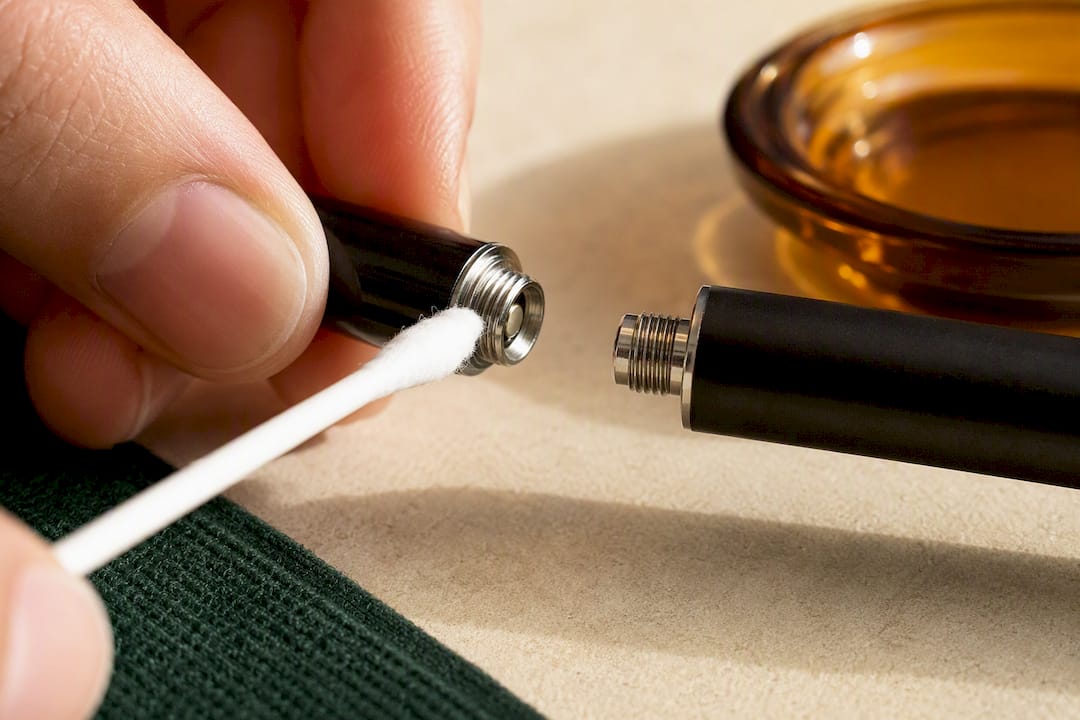
3. Let it dry completely. Isopropyl evaporates fast, but give it a full minute or two before reconnecting. Reattaching a damp cartridge just reintroduces moisture into the exact connection you’re trying to fix.
4. Warm the oil gently if it’s thickened and clogged. Roll the cartridge between your palms for 30 to 60 seconds, or use your device’s low-power preheat function if it has one. Never use a lighter, a stove, or boiling water. Direct flame can crack the tank or degrade the oil, and boiling water risks cracking glass from thermal shock.
5. Clear a clogged mouthpiece carefully. A gentle puff of air (blowing back through the mouthpiece, not sucking) can dislodge a small blockage. If that doesn’t work in one or two tries, stop. Forcing it usually pushes oil further into the airway instead of clearing it.
Pro Tip: Warm oil moves. That’s the whole trick behind hand-warming a clogged cart, and it’s also exactly why leaving one in a hot car causes the opposite problem. Same mechanism, different direction.
What you should never do: add any thinning agent, propylene glycol, vegetable glycerin, or anything else, to cannabis oil, and never crank the voltage up to “burn through” a clog. Thinning agents change how the oil combusts and can increase harmful byproducts when heated. Higher voltage does the same thing to a clog that a hot car does to a leak: it just moves the problem from “won’t hit” to “won’t stop dripping.”
How to Prevent Vape Cartridge Leaking Before It Starts
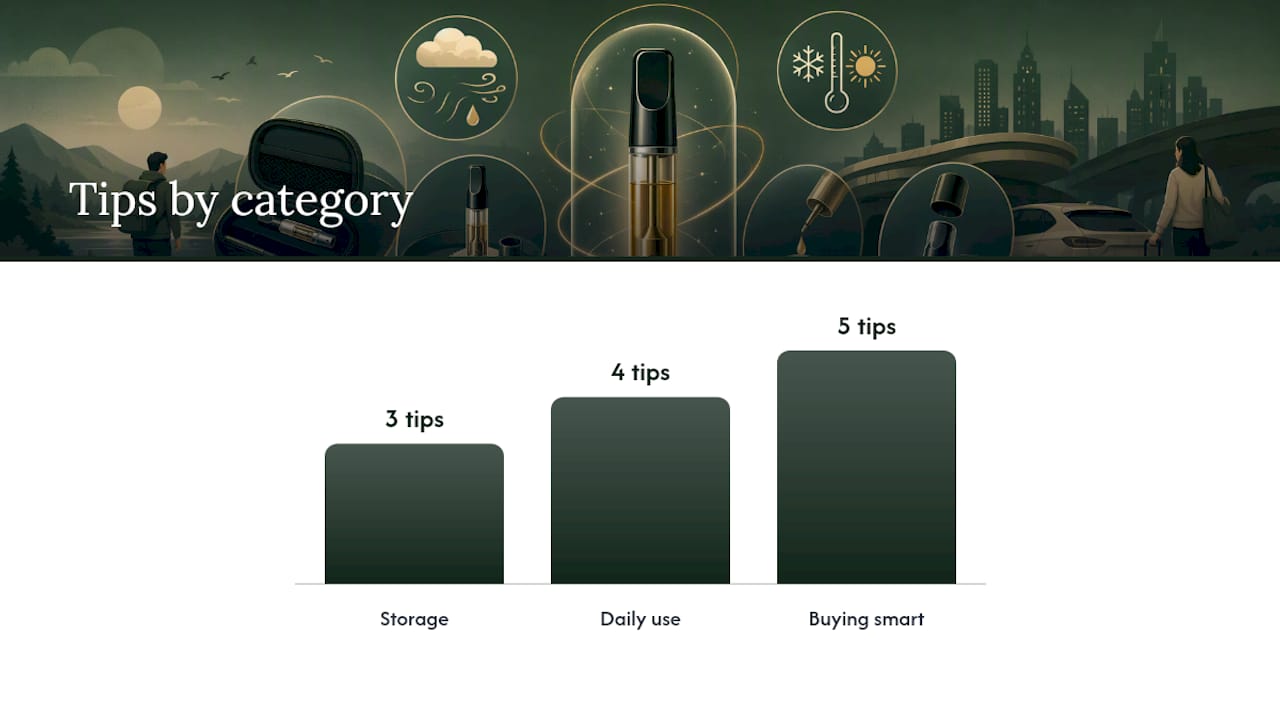
Most leaking vape cartridge complaints trace back to storage and handling, not bad luck. A few consistent habits fix that.
Storage:
- Keep cartridges upright, always, even in a drawer or a bag
- Store at room temperature, away from direct sunlight and away from a hot car dashboard or center console
- On flights or long car trips, an empty cartridge stored mouthpiece-down helps offset the pressure swings that push residual oil into the airway
Daily use:
- Use your device’s preheat function if it has one, especially in cooler weather
- Stay in the low-to-moderate voltage range most 510-thread batteries offer rather than defaulting to the highest setting
- Draw gently and slowly instead of pulling hard and fast
- Hand-tighten the cartridge onto the battery. Snug, not wrench-tight
Buying smart: Favor cartridges with visible batch numbers and lab results over anything unlabeled, and pick hardware genuinely matched to the oil’s viscosity. Manufacturer guidance on leak prevention repeatedly points to correct filling procedure and upright storage as the two biggest levers a buyer and a producer both control. If a cartridge arrives already leaking or leaks again within days of normal use, that’s a return, not a troubleshooting project. If you’re still deciding between a refillable cartridge setup and a disposable pen, it’s worth comparing how cartridges and disposables handle differently before you buy.
What Professional Delivery Handling Teaches About Leak Prevention
Handling hundreds of cartridges a week teaches you where leaks actually start. At Greenonthegodelivery, every cartridge on the menu comes from lab-tested, batch-verified inventory, because even regulated products can show hardware issues after filling and distribution.
The routine we’d recommend to any customer is the same one used on the receiving end of a delivery: inspect the cartridge the moment it arrives, store it upright immediately, and use a gentle preheat with low-voltage draws from the first pull onward. Check the batch lab results before you use anything that’s been sitting around, and if a cartridge shows any sign of leaking on arrival, treat that as grounds for a return, not a repair project.
When to Fix It Yourself and When to Just Replace It
Cleaning threads and warming thickened oil is low-risk and often works. Trying to force a fix on a cracked tank or oil that’s reached the battery isn’t worth the savings, and it can turn a $40 cartridge into a damaged battery or a burn risk. Replace it once you see a crack, oil inside the battery housing, or heat that won’t quit at low voltage. My rule of thumb hasn’t changed in years of watching people troubleshoot these things: upright, low heat, gentle draws. Everything else is a workaround.
— Jake
Get a Reliable Replacement Cartridge, Delivered Same Day
If your cartridge is past saving, don’t gamble on an unlabeled replacement from somewhere that can’t show you a lab result. There are licensed delivery services offering curated menus with cartridges that come with verifiable batch lab data and hardware built for the oil they contain, helping to avoid issues like viscosity mismatches that cause leaks.

Check the batch data, pick a cartridge matched to how you actually vape, and get it delivered the same day if you’re anywhere in Alameda County, including Berkeley, Dublin, or Livermore. Place your order and skip the walk-in guesswork entirely.
Sources
For deeper detail on hardware failure mechanics, read the science behind cartridge failures. For a plain-language walkthrough of fixing a clogged or leaking device, see why carts clog and leak. For battery-specific cleanup steps, check how to fix a leaking 510 cartridge.
- The Science Behind Vape Cartridge Failures: What Causes Carts to Leak & How to Fix a Leaking Cart (with N.N. Analytics)
- Why Vape Carts Clog and Leak, and How to Actually Fix One
- How to Fix a Leaking 510 Cartridge On Your 510 Battery | Got Vape
- How to Prevent Leaks in Vape Cartridges
FAQ
Is It Okay to Keep Using a Vape That’s Leaking?
No. Continued use pushes more oil into the battery connection and airway, raising the risk of a burnt taste, a damaged battery, or oil ending up in your mouth on the next draw.
What Should I Do First If My Vape Is Leaking?
Unscrew the cartridge, stand it upright, and clean the battery threads with an isopropyl-dampened swab before you touch it again. That single step stops most leaks from getting worse while you figure out the cause.
Why Is My Vape Leaking Through the Airflow or Mouthpiece?
Oil in the airway usually means flooding from overfilling, heat-thinned oil, or a worn seal that’s letting liquid past the wick chamber. It’s a hardware or formulation issue, not something caused by how you’re inhaling.
Why Does Liquid Keep Getting Into My Mouth When I Vape?
That’s flooding, and it typically means oil has pooled in the mouthpiece from a cracked seal, an overfilled cartridge, or oil that’s turned too thin from heat. Stop using it, inspect the base for cracks, and clean the connection before trying again at low voltage.
Ready to order?
Licensed, same-day cannabis delivery across Oakland, Berkeley, Fremont and all of Alameda County.
Order Online