
Read COAs in 30 Seconds: Indica vs Sativa for Alameda County Shoppers
September 19, 2026
Read COAs in 30 Seconds: Indica vs Sativa for Alameda County Shoppers
Indica and sativa describe plant shape, not guaranteed effects. A strain’s actual chemistry, its THC:CBD ratio and terpene profile, does the real work of predicting how it will feel. Hybrids now dominate dispensary menus, and individual response varies enough that the safest move is checking the lab results, not the leaf shape.
TL;DR:
- THC and CBD ratios, not plant shape, determine the actual psychoactive and therapeutic effects of cannabis products.
- Most strains labeled indica or sativa are chemically similar, with significant overlap in cannabinoid and terpene content, making the labels unreliable for effect prediction.
- Terpene profiles, especially the dominant two components, provide more accurate insight into a strain’s expected effects than traditional plant category labels.
- Hybrid strains, which make up most commercial products, are bred for specific traits, rendering the indica-sativa distinction almost meaningless in effect prediction.
- Checking current lab results and selecting products based on chemical profiles ensures a more predictable and personalized cannabis experience.
Table of Contents
- Indica vs Sativa: The Plant Traits Behind the Labels
- Why Do THC and CBD Ratios Matter More Than the Label?
- What Do Terpenes Tell You About a Strain’s Effects?
- Do Indica and Sativa Actually Produce Different Effects?
- Why Hybrids Make the Indica/Sativa Debate Nearly Pointless
- How Do You Pick a Strain That Actually Matches Your Goal?
- How Green On The Go Puts This Guide Into Practice
- Takeaways: What to Check Before You Buy
- The Chemistry-First Take on Indica vs. Sativa
- Order Lab-Tested Strains With Green On The Go
- Sources
- FAQ
Indica vs Sativa: The Plant Traits Behind the Labels
The indica and sativa labels started as botanical shorthand, not effect predictors. Growers centuries ago noticed real physical differences between cannabis plants growing in different climates, and those differences are still visible in nurseries today.
Sativa plants evolved near the equator, in places like Southeast Asia and parts of Central America, where long growing seasons rewarded tall, lanky growth. Indica plants developed in harsher mountain climates, like the Hindu Kush region of Afghanistan and Pakistan, where a shorter, denser structure handled wind and cold better.
Those origins shaped the traits growers still use to sort plants visually:
- Sativa: tall (often 6 to 12 feet unpruned), narrow leaves, longer flowering time
- Indica: shorter and bushier (typically 3 to 6 feet), broad leaves, faster flowering
- Bud structure: sativa tends toward looser, airier colas; indica toward dense, tight clusters
None of that tells you what the plant will do once it’s dried, cured, and lit. Genetic analyses of modern cannabis varieties show decades of cross-breeding have scrambled historic indica and sativa lineages so thoroughly that morphology no longer reliably tracks chemical profile. A short, bushy plant can carry a chemical fingerprint that looks nothing like its ancestors.
Why Do THC and CBD Ratios Matter More Than the Label?
THC (tetrahydrocannabinol) is the cannabinoid responsible for the classic high: euphoria, altered perception, appetite changes. CBD (cannabidiol) doesn’t produce that intoxication on its own, and it appears to soften some of THC’s edges, taking some intensity off the psychoactive effect without necessarily eliminating it.
The ratio between the two changes the experience more than the indica/sativa sticker ever will:
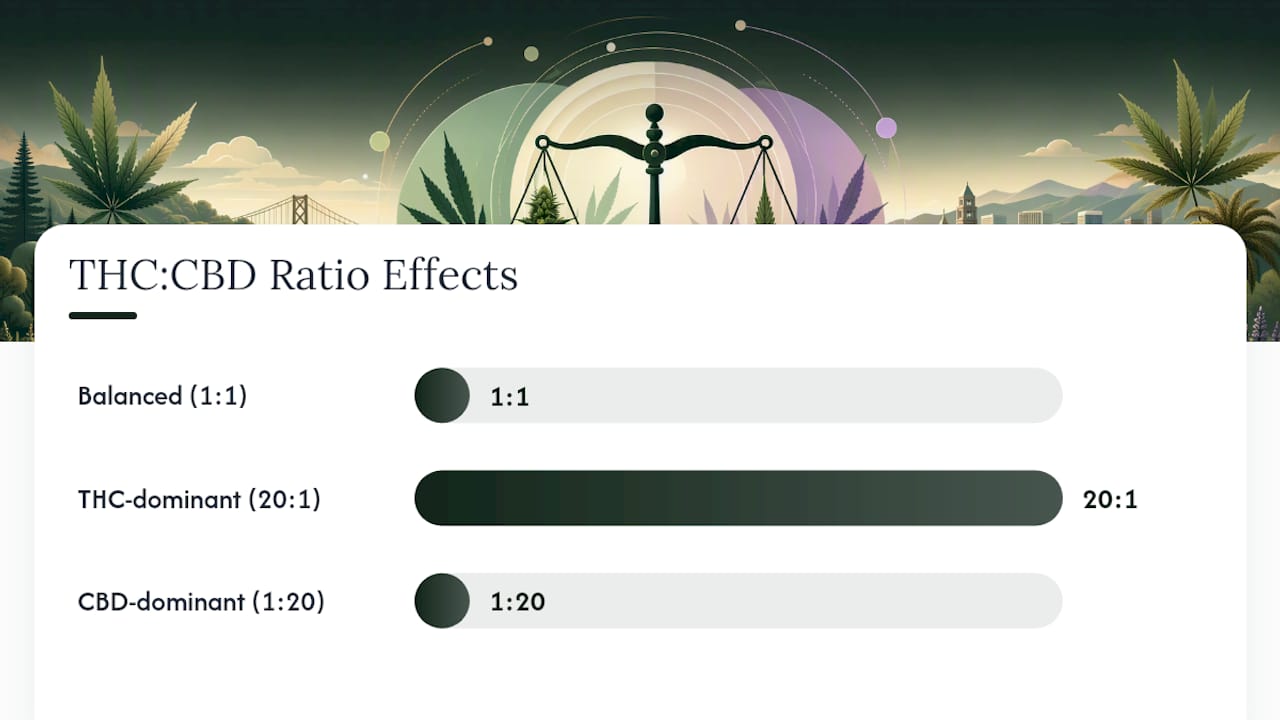
- A 1:1 THC:CBD product (say, 10mg of each) tends to produce a milder, more balanced feel, with less anxiety or racing thoughts than a THC-dominant product at the same THC dose
- A 20:1 THC:CBD product delivers a much more intense, primarily psychoactive experience with little of CBD’s moderating influence
- A high-CBD, low-THC product (1:20 or higher) can offer relaxation or pain relief with minimal intoxication at all
Quick fact: Chemical analyses of tens of thousands of commercial flower samples found extensive overlap in cannabinoid content between products labeled “sativa” and “indica,” which means the label alone predicts almost nothing about potency or ratio.
Minor cannabinoids are starting to earn attention too. CBG (cannabigerol) and CBC (cannabichromene) show up in smaller concentrations but are being studied for their own contributions to mood and pain effects. They rarely appear on a basic label, but full certificates of analysis increasingly break them out. If you’re comparing two products with identical THC percentages, a difference in minor cannabinoid content can explain why they feel different.
What Do Terpenes Tell You About a Strain’s Effects?
Terpenes are the aromatic compounds that give cannabis its smell, and they appear to interact with cannabinoids in what researchers call the entourage effect, where the combination shapes the experience more than THC alone. Ethan Russo’s research on cannabis synergy is the foundational work behind this idea, and it’s a big part of why chemists now argue terpene data belongs on every label.
A handful of terpenes show up again and again in strain data, each with associations worth knowing:
- Myrcene: earthy, musky, frequently linked to sedating, couch-lock type relaxation
- Limonene: citrusy, associated with uplifted mood and stress relief
- Pinene: piney, connected to alertness and focus
- Linalool: floral (also found in lavender), tied to calming effects
- Caryophyllene: peppery, notable for anti-inflammatory activity
- Terpinolene: floral and herbal, often found in sativa-leaning chemovars with a more energetic reputation
These associations come from broader plant-chemistry and terpene bioactivity reviews, not guesswork.
Reading a terpene profile is simpler than it sounds. A certificate of analysis lists each detected terpene by percentage of total weight. If myrcene sits at the top of the list above 0.5%, expect something more sedating regardless of whether the package says indica or sativa. If limonene or pinene lead instead, expect something brighter.
Pro Tip: Skip the indica/sativa sticker entirely and scan for the top two terpenes on the certificate of analysis. That pairing tells you more about how a strain will actually feel than the plant category ever will.
Do Indica and Sativa Actually Produce Different Effects?
Consumers commonly describe sativa as energizing and indica as relaxing, and that pattern shows up often enough in casual reporting feeling like a rule. It isn’t one. The variability between individual products, and between individual people, is significant enough that the rule breaks down constantly.
Large chemical surveys of commercial cannabis found that products labeled sativa and indica overlap heavily in both cannabinoid and terpene content, which is the mechanical reason the “rule” fails so often in real life. Healthline’s consumer guide reaches a similar conclusion: the traditional associations exist in the general sense, but they’re unreliable enough that chemistry should guide the actual purchase decision.
Matching a goal to chemistry works better than matching a goal to a category:
- Sleep: look for myrcene-forward profiles with a higher THC ratio and minimal limonene
- Pain: caryophyllene and CBD-forward ratios tend to show up in pain-focused product lines
- Mood lift: limonene and pinene-heavy terpene profiles, paired with moderate THC
- Creativity or focus: lower THC doses with pinene or terpinolene as dominant terpenes
Clinical research on cannabinoids is still catching up to consumer demand, and individual response varies enough that dosing and personal chemistry matter as much as the product itself.
Why Hybrids Make the Indica/Sativa Debate Nearly Pointless
Most of what’s sold today isn’t a pure indica or pure sativa. It’s a hybrid, bred deliberately by crossing plants for specific traits: flavor, potency, yield, resistance to mold, or a particular effect a breeder is chasing. A strain like Blue Dream mixes indica and sativa heritage into something that behaves like neither parent exactly.
Genetic evidence backs up what breeders already knew from experience. Modern cannabis genetics show so much cross-pollination between historic lineages that treating indica and sativa as separate, predictable categories doesn’t hold up scientifically. Combined with the chemical overlap data showing near-identical cannabinoid and terpene ranges across labeled categories, the case for retiring the old binary is strong.
The alternative gaining traction among scientists and serious growers is the chemovar system, classifying a plant by its actual chemical output rather than its ancestry. A useful chemovar label includes:
- THC and CBD percentages (a range, not a single number, since batches vary slightly)
- Dominant terpenes, usually the top two or three by percentage
- The date of the certificate of analysis, since cannabinoids can degrade over time
- Any minor cannabinoids tested (CBG, CBC, CBN)
A strain like Wedding Cake gets marketed as an “indica-leaning hybrid,” but the useful information is the chemovar data sitting underneath that marketing description.
How Do You Pick a Strain That Actually Matches Your Goal?
Skip the leaf-shape guesswork and work through the chemistry systematically. Here’s the order that actually works:
- Define your goal and timing first. Sleep aid at night, pain relief throughout the day, mood lift for a social event. Be specific, since “relaxing” and “sedating” call for different chemical profiles.
- Pull up the certificate of analysis (COA). Every legally sold product should have one. Check the THC:CBD ratio against your goal. A 1:1 ratio suits someone wanting balance; a THC-dominant ratio suits someone chasing a stronger psychoactive effect.
- Check the terpene breakdown. Match the top two terpenes against the effect associations covered above. Myrcene-heavy for sleep, limonene or pinene-heavy for daytime energy.
- Dose conservatively and wait. Start with the lowest available dose, especially with edibles, which can take 30 to 90 minutes to hit and last far longer than smoked or vaped products. Give it a full two hours before considering more.
When you’re at a counter or ordering online, ask direct questions: What’s the COA date? Is this batch retested if it’s been on the shelf more than a few months? What are the top three terpenes? A budtender who can answer specifically, rather than falling back on “it’s an indica, so it’s relaxing,” is giving you better information.
Pro Tip: Save a photo of any COA you like the results of. Comparing new purchases against a product that worked well for you is faster and more reliable than trying to remember a strain name months later.
How Green On The Go Puts This Guide Into Practice
Every listing in the Green On The Go strain guide is built around the chemistry-first approach this article recommends, not the old botanical shorthand. Pages like the Cannalope Kush strain guide and the Apple Mango Haze strain guide lay out cannabinoid content and dominant terpenes so you can run through the checklist above before you ever place an order.
That data only matters if the product behind it is consistent. The company sources products through a fully licensed supply chain and offers a curated menu supported by verifiable lab results and batch consistency, helping ensure the terpene profile shown on a strain page matches what customers receive.
Takeaways: What to Check Before You Buy
The label on the jar is the least useful piece of information on it. What matters:
- THC:CBD ratio, checked against your specific goal
- Top terpenes, matched against known effect associations
- COA date, since cannabinoids degrade over time
- Starting dose, kept low regardless of what the category label claims
| Check | Why It Matters |
|---|---|
| THC:CBD ratio | Determines intensity and psychoactive balance |
| Terpene profile | Predicts subjective effect better than indica/sativa |
| COA date | Confirms potency data is current, not stale |
| Starting dose | Prevents overshooting, especially with edibles |
Chemistry, not leaf shape, is the honest way to pick a strain that does what you actually want.
The Chemistry-First Take on Indica vs. Sativa
The conventional advice, “sativa for day, indica for night,” survives because it’s simple, not because it’s accurate. The chemical overlap data makes that clear: plenty of sativa-labeled products will put you to sleep, and plenty of indica-labeled products will leave you wired. The category was never built to predict effect. It was built to describe how tall a plant grew in a field in Afghanistan two hundred years ago.
What gets underrated is how much terpene data alone can do once you know what to look for. Most shoppers fixate on THC percentage and ignore the terpene list entirely, even though myrcene versus limonene dominance often explains the difference between two products with nearly identical potency. That’s the piece worth prioritizing first, before ratio, before brand, before anything else on the label.
The gap between what dispensary marketing promises and what the lab results actually say is real, and it’s not closing on its own. Reading a COA takes thirty seconds. It’s worth those thirty seconds every time.
— Jake
Order Lab-Tested Strains With Green On The Go
Once you know what to look for, chemistry-first shopping is only useful if the products in front of you actually list that chemistry, and hold up batch after batch. Green On The Go delivers a curated, lab-tested menu across Alameda County the same day you order, so the THC:CBD ratios and terpene notes on a strain page match what shows up at your door.

Browse the cannabis strain guide to check terpene and cannabinoid data before you buy, then head to order online to get same-day delivery. Local drivers cover cities across the county, including Berkeley and Livermore, with the full list on the delivery areas page. Pick your chemovar, place your order, and let the lab results do the talking.
Sources
- Ethan B. Russo — ‘Taming THC: potential cannabis synergy and phytocannabinoid-terpenoid entourage effects’ (PMC5576603)
- Chemical analysis of commercial cannabis samples (PMC8246441)
- Genetic analyses of cannabis varieties (PMC7763918)
This article is general information, not a substitute for advice from a qualified doctor. Consult a qualified healthcare professional about your own circumstances before acting on anything here.
FAQ
Is Indica a Downer and Sativa an Upper?
That’s the common shorthand, but it’s not reliable. Chemical analyses show heavy overlap in cannabinoid and terpene content between products labeled indica and sativa, so a myrcene-heavy sativa can sedate just as easily as an indica can.
Does Sativa Increase Arousal More Than Indica?
There’s no solid science tying arousal specifically to the sativa or indica label. Any effect on mood or arousal comes down to the individual’s response to the THC:CBD ratio and terpene profile, like limonene or caryophyllene, not the plant category.
What Is a Hybrid Strain?
A hybrid is a cannabis plant bred by crossing indica and sativa lineages, usually to combine traits like flavor, yield, or a specific effect. Most products on dispensary menus today, including strains like Candy Krush, are hybrids rather than pure indica or sativa.
Is Hybrid or Sativa Better for Daytime Use?
Neither category guarantees a daytime-friendly experience on its own. Check for terpinolene, limonene, or pinene as dominant terpenes with a moderate THC dose, regardless of whether the product is labeled hybrid or sativa.
How Much Does Green On The Go’s Delivery Cost?
Delivery fees and current product prices are listed at checkout when you order online. Same-day delivery is available across cities in Alameda County, including Oakland and Berkeley.
Recommended
Ready to order?
Licensed, same-day cannabis delivery across Oakland, Berkeley, Fremont and all of Alameda County.
Order Online