
1% Terpenes, Not Labels: East Bay Guide to Hybrid vs Sativa
Sativa-labeled flower tends to skew cerebral and energizing, while hybrids land somewhere in the middle, blending traits from both sides of the plant family. But neither label is a reliable predictor of your experience. The number that matters more is the one on the lab sheet: THC and CBD percentages plus the dominant terpenes. Read chemistry first, treat the sativa/hybrid tag as a rough starting filter, and you’ll pick better every time.
TL;DR:
- THC and CBD levels, along with dominant terpenes, are more reliable indicators of effects than traditional sativa or hybrid labels.
- Most commercial strains are hybrids with overlapping genetics, making labels like sativa or indica only rough guidelines rather than precise predictors.
- Genetic studies show that labels often do not correlate with actual chemical profiles or effects experienced by users.
- Reading lab panels for THC percentage, CBD content, and primary terpenes provides a clearer understanding of a product’s likely impact.
- Product formats, such as edibles or inhalables, influence onset and duration more than strain classification, requiring tailored dosing and safety considerations.
Table of Contents
- Hybrid vs Sativa at a Glance
- What Cannabis Strains Actually Are
- What a Sativa Label Usually Means
- What Hybrid Really Means on a Menu
- Why the Sativa and Hybrid Labels Mislead You
- Reading a Lab Panel Like You Mean It
- How to Choose Between a Hybrid and a Sativa
- Dosing and Safety by Format
- Where the Sativa and Hybrid Labels Came From
- Common Myths About Sativa and Hybrid Strains
- What People Actually Use Each Type For
- Legal Status of Sativa, Indica, and Hybrid Products
- A Local Perspective on Chemistry-First Shopping
- Order Lab-Tested Hybrid and Sativa Products Today
- Sources
Hybrid vs Sativa at a Glance
Before getting into genetics and lab science, here’s the shorthand version most shoppers actually want when they’re standing in front of a menu.
| Category | Sativa-leaning | Hybrid |
|---|---|---|
| Best for | Daytime focus, creativity, social settings | Flexible use, balanced relaxation with clarity |
| Typical terpenes | Limonene, pinene, terpinolene | Varies widely; often myrcene plus a citrus or pine note |
| Plant traits | Tall, narrow leaves, longer flowering time | Variable height, mixed leaf shape, moderate flowering time |
| Typical THC range | Moderate to moderately high THC levels common | Moderate to moderately high THC levels common |
| Recommended format/time | Vape or flower, morning or afternoon | Any format, any time, depending on the specific cross |
A few things worth keeping in mind as you shop:
- Check the terpene panel before the strain name. Two products labeled “sativa” from different growers can feel completely different.
- If anxiety is a concern, look for hybrids or sativa-leaning options with meaningful CBD content, not just high THC.
- Ask your delivery service or budtender for the actual lab certificate, not just the shelf tag.
- Don’t assume “hybrid” means balanced 50/50. It can lean either direction, sometimes heavily.
What Cannabis Strains Actually Are
A cannabis strain is a specific cultivar, a genetic line bred and maintained for consistent traits, similar to how “Honeycrisp” describes a specific apple rather than “apple” in general. The confusion starts because retail labels compress three different ideas into one word.
- Landrace: a naturally occurring regional population, like Afghani or Thai varieties, that developed over generations in one climate.
- Cultivar: a bred, named plant maintained through cloning or selective breeding for specific traits.
- Chemovar: a classification based on actual chemical output (cannabinoid and terpene content) rather than lineage or appearance.
Most flower sold today is a hybrid in the genetic sense, because decades of breeding have crossed nearly everything with everything else. Market data from PhenoDB’s analysis of strain classifications shows the vast majority of commercial strains fall into the hybrid category, which is exactly why the sativa and indica labels you see on a menu describe a general impression, not a strict botanical category. Morphology (how a plant looks and grows) and chemistry (what it produces) are related but not identical. A plant can have classic sativa architecture and still test high in terpenes typically associated with indica-leaning effects.
What a Sativa Label Usually Means
Sativa-leaning plants tend to grow tall with narrow, finger-like leaves and take longer to flower than their indica-leaning counterparts, often stretching the grow cycle by several weeks. That growth pattern originated in equatorial regions where longer growing seasons rewarded taller, slower-maturing plants.
On the effects side, sativa-labeled products get associated with mental clarity, sociability, and energy rather than heavy body relaxation. That reputation tracks loosely with certain terpenes showing up more often in sativa-leaning chemovars:
- Limonene: citrus aroma, linked to uplifted mood in consumer reports.
- Pinene: pine scent, associated with alertness.
- Terpinolene: floral, herbal notes common in many sativa-dominant crosses.
These terpene associations come from consumer-reported patterns and aroma chemistry research, not guarantees. Use cases that fit the sativa reputation include morning or midday use, creative work, and social gatherings where you want to stay engaged rather than sink into the couch.
Pro Tip: If you’re new to sativa-leaning products, start with a strain that lists both THC percentage and a dominant terpene on the label, like the Apple Mango Haze strain guide. Matching a known terpene profile to your goal beats guessing from the name alone.
What Hybrid Really Means on a Menu
“Hybrid” simply means the plant descends from both sativa and indica lineage, which by now describes nearly everything on a dispensary shelf. Breeders create hybrids deliberately, crossing a fast-flowering, resinous indica-type plant with a taller, more cerebral sativa-type plant to chase specific outcomes: bigger yields, particular flavors, or a blended effect profile.
Menus usually break hybrids into three rough categories:
- Sativa-dominant hybrid: genetically weighted toward sativa traits, often energizing with some relaxation underneath.
- Indica-dominant hybrid: weighted toward indica traits, generally calming with a lighter mental lift.
- Balanced hybrid: bred to sit near the middle, though “balanced” is a breeder’s intent, not a chemistry guarantee.
Because hybrids dominate the modern market, they’re also the least predictable category by label alone. Two “balanced hybrids” from different breeders can produce noticeably different experiences depending on their actual terpene mix. The Wedding Cake strain guide and Candy Krush strain guide are both hybrids with published lab data, which is the only way to compare them meaningfully. Hybrids make sense when you want flexibility, when you’re unsure which direction to lean, or when a specific cross has a terpene profile that matches your goal regardless of its sativa or indica percentage.
Why the Sativa and Hybrid Labels Mislead You
Genetic testing has quietly undermined the whole sativa/indica/hybrid framework. A large-sample genetic and chemotype study published in Nature Plants found that plants labeled “indica” and “sativa” at retail often overlap heavily at the genetic level, with aroma chemistry, meaning terpenes, providing only a small predictive signal on top of that overlap.
The label on the jar tells you what a breeder or retailer decided to call a plant. It does not reliably tell you what that plant will do to your body.
Market-scale data backs this up from a different angle. PhenoDB’s strain-classification dataset shows THC distributions overlapping heavily across labeled types, meaning a “sativa” and a “hybrid” pulled at random can carry nearly identical potency. Review-level research on cannabis chemistry, published in a pharmacology review, reinforces that THC/CBD ratios and terpene composition correlate with subjective effects far more consistently than the taxonomic label does once dose is held constant.
None of this means the labels are useless. They’re a decent coarse filter, a way to narrow a hundred menu items down to twenty before you start reading lab panels. Treat sativa, indica, and hybrid as a rough sorting bin, not a prescription.
Reading a Lab Panel Like You Mean It
A lab panel is the actual product information you’re paying for. Here’s what to look at, in order of importance:
- THC percentage. Higher THC generally means stronger effects and a higher risk of anxiety or discomfort at the top end, especially for infrequent consumers.
- CBD percentage. Even modest CBD content can soften the sharper edges of a high-THC product, moderating intensity without eliminating the effect.
- Total terpene content. A number above roughly 1% suggests a more aromatic, flavorful product; very low terpene content often signals older or degraded flower.
- Dominant terpenes, by name. This is the real fingerprint. Myrcene, limonene, pinene, linalool, and caryophyllene each carry a different reputation.
A short terpene reference: myrcene shows up often in relaxation-leaning products; limonene and pinene lean brighter and more energizing; linalool carries a floral, calming reputation; caryophyllene, the only terpene that also binds cannabinoid receptors directly, shows up in products associated with physical relief. Large dataset analysis from PhenoDB found myrcene correlating with relaxation-associated profiles, while limonene and terpinolene tracked with brighter, more uplifting ones.
The “entourage effect,” the idea that cannabinoids and terpenes work better together than any single compound alone, remains a working theory more than a settled fact. Plant-science research in Frontiers in Plant Science documents the biology behind terpene production clearly, but notes that human-effect evidence for entourage claims is still preliminary. Treat terpene guidance as a useful lean, not a lab-confirmed prediction.
How to Choose Between a Hybrid and a Sativa
Skip the label debate entirely and work through this instead:
- Name your goal and your timing. Daytime energy, evening wind-down, focused creativity, or social ease each point toward a different chemistry, not a different taxonomic category.
- Read THC and CBD first. If you’re anxiety-prone or new to cannabis, favor lower THC (under 18%) or a meaningful CBD ratio, regardless of whether the label says sativa or hybrid.
- Check the primary terpene. Match it to your goal using the short guide above. A hybrid high in limonene will likely feel brighter than a sativa loaded with myrcene.
- Pick your format based on onset needs. Flower and vape hit fast and fade faster; edibles take longer but last much longer. Choose based on how much control you want over timing.
- Start low and log what happens. Track the actual product, its THC/CBD numbers, and its top terpene alongside how you felt. That log becomes more useful than any label after two or three tries.
Pro Tip: Keep a simple notes app entry for every product: name, THC%, CBD%, top terpene, and a one-line effect summary. After a month, you’ll spot your own patterns faster than any menu description could tell you.
The Blue Dream strain guide is a good example of this process in action: a sativa-leaning hybrid with published lab data that lets you match chemistry to expectation before you ever place an order.
Dosing and Safety by Format
Format changes the experience more than the sativa/hybrid distinction does, especially around timing and risk. A clinical pharmacology review documents onset for smoked or vaped cannabis within minutes, with effects tapering over one to three hours. Edibles behave completely differently, with onset delayed 30 to 120 minutes and effects extending for several hours, which is exactly why edibles cause more accidental overconsumption than any other format.
- Start edibles at a low THC dose and wait sufficiently long before considering more to avoid overconsumption.
- Start inhaled products with a single small inhalation and wait several minutes before continuing.
- Common adverse effects include anxiety, rapid heartbeat, dry mouth, and impaired coordination, all of which scale with dose more than with strain label.
- Talk to a clinician before combining cannabis with prescription medications or if you manage a cardiac or psychiatric condition.
- Confirm you’re buying from a licensed source with verifiable lab results; regulated markets like New York’s official dispensary verification tool show how licensed sellers make that information checkable.
The FDA has been explicit that it does not consider cannabis or most cannabis-derived products FDA-approved, so treat marketing claims about specific health benefits with skepticism regardless of the format or the label on the jar.
Where the Sativa and Hybrid Labels Came From
The sativa/indica split traces back to 18th-century botanical classification, when European naturalists grouped cannabis plants by region and appearance rather than chemistry. Cannabis sativa described tall, fiber-producing plants from Europe and Asia; Cannabis indica described shorter, resin-heavy plants observed in the Indian subcontinent. Neither term originally referred to psychoactive effects at all.
That botanical shorthand got adopted by cannabis breeders decades later, long before anyone could test THC or terpene content in a lab. Growers noticed rough correlations between plant shape and reported effects, tall plants seemed more energizing, short bushy plants seemed more sedating, and the terminology stuck as folk wisdom passed between breeders and consumers.
“Hybrid” entered the vocabulary later, once breeders started deliberately crossing sativa and indica lines to combine traits: faster flowering from indica genetics with the taller yield and cerebral reputation of sativa genetics. By the time recreational and medical markets opened up starting in the 2010s, hybrids had already become the practical norm rather than the exception.
The gap between this history and modern lab science is exactly why the labels feel outdated. They were built for pre-scientific plant identification, not for predicting how a specific chemovar will affect a specific person. Genetic testing tools didn’t exist when the categories were invented, so nobody could have designed them around chemistry even if they’d wanted to.
Common Myths About Sativa and Hybrid Strains
The biggest myth is that “sativa” guarantees an energizing effect and “indica” guarantees sedation, with hybrid landing neatly in between. Genetic overlap research shows this breaks down constantly in practice, because a sativa-labeled plant can carry a terpene profile closer to a classic indica reputation, and vice versa.
Those percentages describe genetic ancestry as tracked by the breeder, not a measured ratio of effect-producing compounds. Two plants both labeled “70% sativa hybrid” from different breeding programs can test completely differently on THC, CBD, and terpenes.
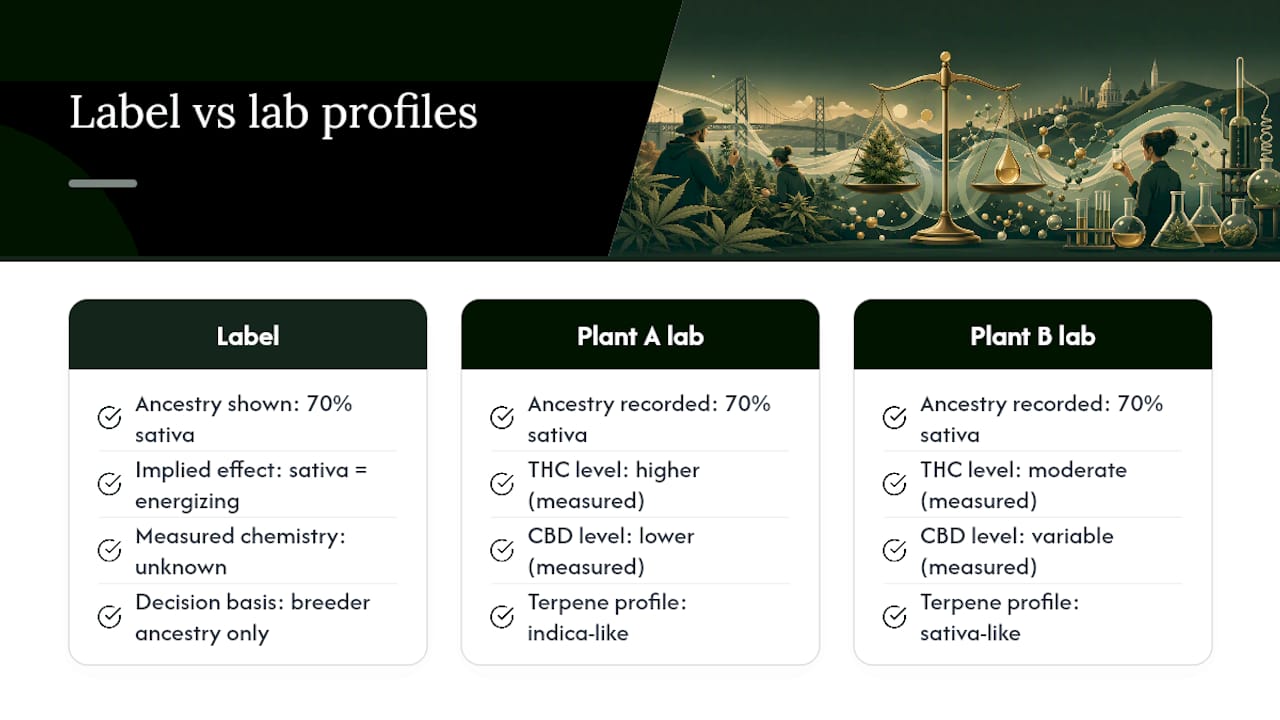
A third myth: that higher THC always means a “stronger” or “better” product. THC percentage predicts intensity reasonably well, but it says nothing about the quality of the experience, how anxious, foggy, or clear-headed you’ll feel. That comes down to the terpene profile and any CBD present, not the THC number alone.
Finally, plenty of consumers assume indica-dominant products are always better for sleep and sativa-dominant products are always better for energy. Individual body chemistry varies enough that some people report the opposite reaction entirely. Treat every label, including your own past experience with a specific strain name, as a hypothesis to test against the actual lab panel each time you buy.
What People Actually Use Each Type For
Consumers commonly reach for sativa-leaning products to manage fatigue, low mood, or difficulty concentrating during the day, chasing the alertness and mental clarity associated with terpenes like pinene and limonene. Creative professionals and social users gravitate here too, looking for engagement without heavy sedation.
Hybrid products get used across nearly every reported condition precisely because the category is so broad. People managing chronic pain often look for indica-dominant hybrids with caryophyllene present, since that terpene also interacts directly with cannabinoid receptors involved in pain signaling. People managing anxiety frequently seek out hybrids with meaningful CBD content paired with linalool, chasing a calming effect without heavy intoxication.
None of these are clinically validated treatment protocols. They’re patterns reported by consumers and tracked informally across dispensary menus and strain-review platforms, not conclusions from controlled medical trials. If you’re managing a diagnosed condition, especially one involving medication, that’s a conversation for a physician, not a strain guide. The FDA’s regulatory guidance is direct on this point: cannabis products, including hybrids and sativas marketed for specific conditions, generally lack the clinical trial backing that FDA-approved medications carry.
Legal Status of Sativa, Indica, and Hybrid Products
Cannabis legality varies enormously by jurisdiction, and the sativa/indica/hybrid label has no bearing on legal status whatsoever. What matters legally is the product’s THC content, the state or country you’re in, and whether you’re buying from a licensed, regulated source.
In the United States, cannabis remains federally restricted even though individual states have legalized medical or recreational use under their own frameworks. Policy tracking from the Marijuana Policy Project shows this state-by-state patchwork continues shifting as more jurisdictions reform their laws, which means rules that apply in one state, including possession limits, purchase age, and delivery zones, may not apply thirty miles away in another.
Buying from a licensed retailer matters more than most consumers realize, because licensed products carry mandatory lab testing that unlicensed products simply don’t. That testing is where the THC, CBD, and terpene numbers this entire guide is built around actually come from. An unlicensed product might carry a “sativa” or “hybrid” label with no verification behind it at all. Always confirm licensing status before you buy, and treat any product without a verifiable lab certificate as a legal and safety unknown regardless of what the label claims.
A Local Perspective on Chemistry-First Shopping
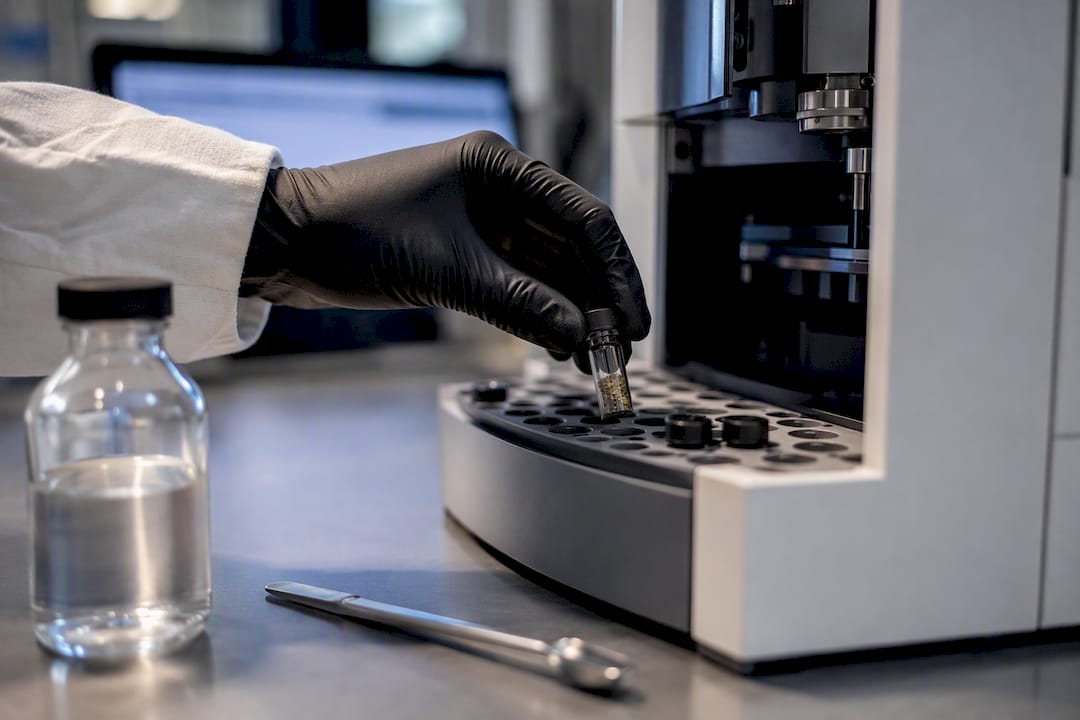
Working around cannabis retail in the East Bay day after day makes one thing obvious fast: customers who ask about terpenes and lab results end up happier with their purchase than customers who just ask for “a sativa.” A curated menu can be built around that reality, sourcing lab-tested flower, vapes, and edibles from trusted brands, so every product on the menu comes with verifiable cannabinoid and terpene data rather than a vague label.
Strain guides published for products like Blue Dream and Wedding Cake can follow the same chemovar-first logic this article lays out: lead with the numbers, then let the sativa or hybrid tag serve as context, not gospel. Same-day delivery across Alameda County can make chemistry-informed choice more accessible.
— Jake
Order Lab-Tested Hybrid and Sativa Products Today
Reading terpene panels and THC ratios only pays off if the product in front of you actually has that data attached. One advantage of ordering through a licensed cannabis delivery service instead of guessing off a shelf tag is that items on the menu can ship with lab results you can actually check before you buy.
Ordering takes a few minutes through the online ordering page, where the curated menu is organized by product type and chemistry rather than vague strain folklore. Same-day delivery covers cities across the Alameda County service area, including Berkeley and Dublin. Pick your goal, check the panel, and place the order.
This article is general information, not a substitute for advice from a qualified doctor. Consult a qualified healthcare professional about your own circumstances before acting on anything here.
Sources
- Watts et al., Nature Plants / large-sample genetic and chemotype study
- Review of cannabis chemistry and effects (NCBI PMC7120914)
- FDA: Regulation of cannabis and cannabis-derived products
- PhenoDB analysis of strain classifications and THC/terpene statistics
- Clinical pharmacology review of cannabis: onset, duration, dosing considerations
Recommended
Ready to order?
Licensed, same-day cannabis delivery across Oakland, Berkeley, Fremont and all of Alameda County.
Order Online