
Alameda County: Store Edibles Safely Using Two Clocks
The safest way to store edibles is simple: keep them cool, dark, and sealed in an airtight container, and move them to the refrigerator or freezer if you won’t finish them within a short time. Lock them away from kids and pets, and label the dose before you toss the original packaging. The exact method shifts depending on whether you’re storing gummies, chocolate, a baked good, or a tincture.
TL;DR:
- Keep edibles in airtight, lightproof containers and remove excess air to slow both spoilage and cannabinoid degradation.
- Store gummies and chocolates in the fridge or freezer for longer shelf life, but avoid unsealed freezing to prevent fat bloom and texture issues.
- Baked goods should be refrigerated or frozen within days, and always wrapped properly to maintain freshness and potency.
- Seal tinctures and oils tightly in dark bottles and store them in a cool, dark place for extended shelf life.
- Use child-resistant and clearly labeled containers, and store out of reach to prevent accidental ingestion, especially with homemade or unlabeled products.
Table of Contents
- How to Store Edibles the Right Way for Freshness and Safety
- Core Storage Rules That Apply to Almost Every Edible
- Storing Different Edible Types the Right Way
- Should You Use the Pantry, Fridge, or Freezer?
- The Best Containers and Tools for Long-Term Storage
- Keeping Edibles Secure and Correctly Labeled
- Signs an Edible Has Gone Bad
- Your Quick Storage Checklist for an Opened Edible
- What Green On The Go Sees Behind the Counter
- Skip the Guesswork: Order Lab-Tested Edibles Delivered Same Day
- Sources
- FAQ
How to Store Edibles the Right Way for Freshness and Safety
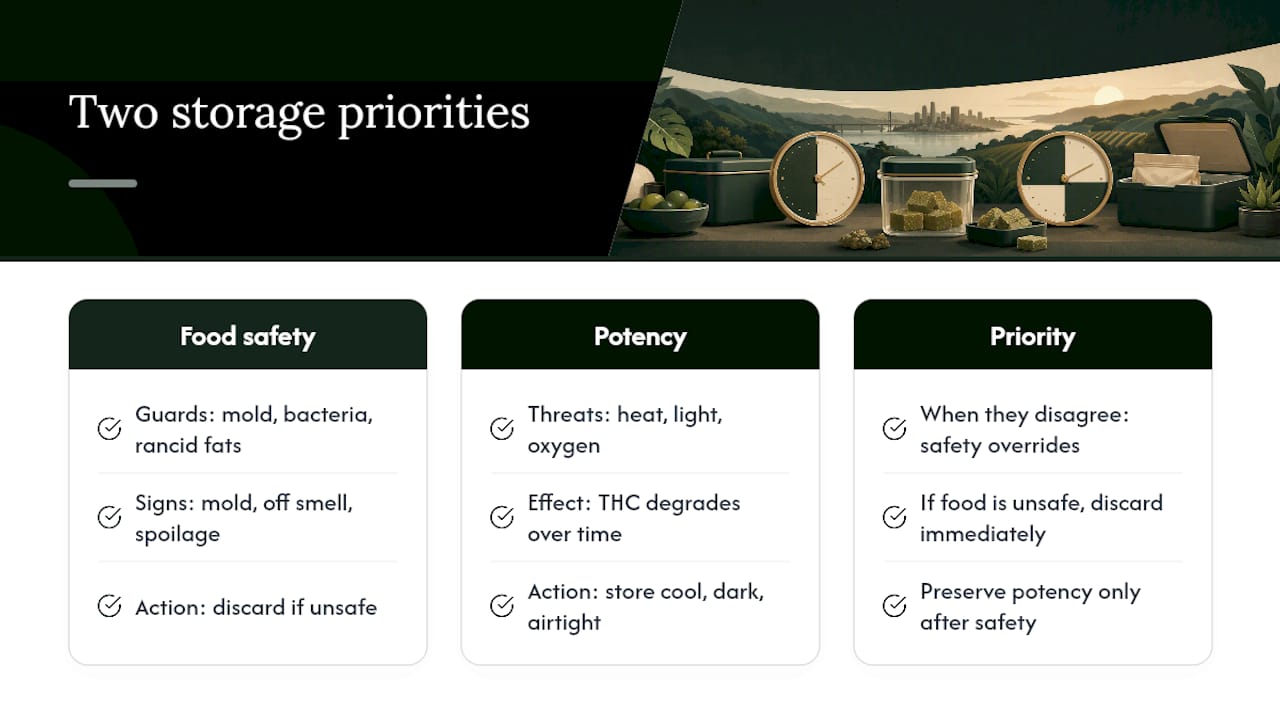
Storing edibles well means solving two separate problems at once, not one. Most people only think about the first.
The first problem is food safety. Baked goods, dairy-based drinks, and anything with fresh ingredients follow the same spoilage rules as their non-cannabis versions. Mold, bacteria, and rancid fats don’t care about THC content.
The second problem is potency. Heat, light, and oxygen all degrade cannabinoids over time, and heat is consistently identified as the primary driver of THC breakdown in stability research on cannabis products. A gummy left on a sunny windowsill won’t make you sick, but it will lose strength faster than one kept in a dark cabinet.
Here’s the part people miss: when these two clocks disagree, food safety always wins. A brownie might still hold most of its potency after five days on the counter, but if it’s grown a fuzzy edge or smells off, the THC content is irrelevant. Treat the food-safety clock as the one that overrides everything else, and let potency preservation guide your choices only after safety is settled.
Core Storage Rules That Apply to Almost Every Edible
A handful of rules cover the majority of situations, regardless of what kind of edible you’re holding.
- Go airtight. Oxygen speeds up both spoilage and cannabinoid loss, so mason jars, vacuum-sealed bags, or containers with silicone gaskets beat a folded-over bag every time.
- Kill the headspace. The more air trapped above your product, the faster it degrades. Smaller containers filled closer to the top outperform a half-empty large jar.
- Keep temperatures steady. Swings between warm and cold accelerate degradation more than a consistently cool spot does.
- Block the light. UV and even regular indoor light break down cannabinoids over weeks and months. Opaque containers or original packaging often help block damaging light exposure.
- Manage humidity. Gummies and chocolates are sensitive to moisture. A two-way humidity pack keeps them from drying out or turning sticky.
Pro Tip: If you’re not sure whether to buy a new storage container, just keep the original packaging as long as it’s intact. Licensed products are usually already opaque, airtight, and child-resistant by design, which solves three problems at once.
Storing Different Edible Types the Right Way
Not every edible behaves the same way in storage, and treating a chocolate bar like a gummy (or vice versa) is where most freshness problems start.
Gummies and hard candies are low-moisture products, which works in your favor. Sealed and kept cool, gummies commonly hold up for 6 to 12 months, though refrigeration can extend that further. The tradeoff is texture: too much cold moisture and they turn tacky or cloudy, so a humidity pack matters more here than almost anywhere else.
Chocolate is more particular. Wrap it tightly and keep it somewhere cool and dry, but skip the freezer unless it’s vacuum-sealed first. Unsealed freezing causes fat bloom, that pale, chalky film that forms when cocoa fat separates, and it invites condensation once thawed.
Baked goods are the most perishable category by far. A cannabis brownie behaves exactly like a regular one: a few days at room temperature, a week or two refrigerated, and months in the freezer if wrapped individually and cooled completely before sealing. Cutting into portions before freezing also means you’re not thawing more than you need.
Tinctures and oils are the easiest edibles to store long-term. Kept in their amber bottles, capped tightly, and stored somewhere cool and dark, they resist degradation for a long stretch since there’s no perishable food matrix involved.
Beverages and dairy-based edibles follow standard refrigeration rules once opened. Cannabis-infused milk, creamers, or drinks with dairy need the same urgency as any other perishable drink in your fridge.
Should You Use the Pantry, Fridge, or Freezer?
Picking the right temperature zone comes down to two questions: what’s in the edible, and how long do you need it to last?
- Pantry (roughly 60 to 70°F): Fine for shelf-stable items like sealed chocolate, gummies, or tinctures you’ll use within a few weeks, as long as the spot stays consistently cool and out of direct light.
- Refrigerator: The right call for anything perishable, dairy-based, or homemade that you plan to finish within one to two weeks. Just seal it tightly, since fridges are humid and unsealed edibles pick up moisture and odors fast.
- Freezer: The strongest option for potency preservation over months, but only if the edible is vacuum-sealed or wrapped to eliminate air contact. Freezing properly sealed products slows cannabinoid degradation more effectively than any other home method, though repeated freeze-thaw cycles undo that benefit fast.
When you’re ready to eat something frozen, don’t rip the seal open and let it hit warm air immediately. Move it to the refrigerator first, let it thaw sealed for several hours, then bring it to room temperature before opening. That order avoids the condensation that turns a crisp cookie soggy or a chocolate bar grainy.
The Best Containers and Tools for Long-Term Storage
Good containers do most of the work for you, which is why it’s worth spending a little more on the right one.
- Glass mason jars or CVault-style stash containers block light, seal tightly, and don’t absorb odors the way plastic can over time.
- Vacuum sealers are worth it if you’re freezing baked goods or oils, since removing air is what prevents freezer burn and texture damage on thaw.
- Two-way humidity packs (58% or 62% RH) keep gummies and chocolates from drying out or sweating, while silica gel packets are better suited to items where you want moisture pulled out entirely, like crumbly baked goods.
- Separate containers per product type prevent odor transfer between, say, a chocolate bar and a batch of gummies.
Pro Tip: Label the humidity pack’s install date on a sticky note. Most lose effectiveness after a few months, and a dead pack is worse than no pack at all if it starts leaking moisture back into the jar.
Keeping Edibles Secure and Correctly Labeled
Storage isn’t only about freshness. It’s also about making sure nobody eats something by accident.
- Use child-resistant containers or a small lockbox, especially in a home with kids, pets, or guests who don’t know what’s in the jar.
- Store edibles somewhere out of sight, not just out of reach. Top shelves and closed cabinets both help.
- If you transfer edibles out of their original packaging, write down the dose per piece and the date, since dose information is the main safety signal once packaging is gone.
- Never mix edibles into the same container as regular snacks. A cannabis gummy that looks identical to a candy gummy is exactly how accidental ingestions happen.
- If anyone in your household is at higher risk, whether that’s a curious toddler or a pet that gets into everything, add a second locked layer on top of a resealable container.
The CDC’s guidance on cannabis poisoning points to secure, out-of-reach storage as one of the most effective ways to prevent accidental ingestion, particularly in children.
Signs an Edible Has Gone Bad
Trust your senses over the calendar. Visible mold, fuzzy spots, or discoloration are clear signs to discard the edible. The same goes for a sour or off smell, sliminess, or a texture that’s suddenly mushy or unusually hard.
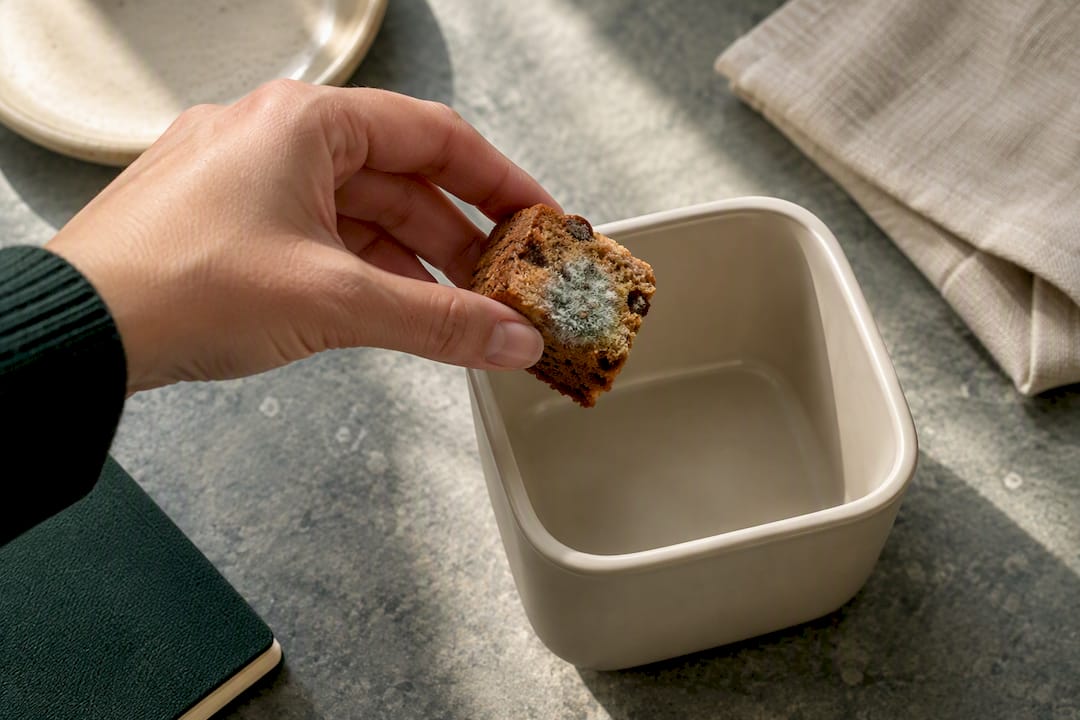
Potency loss is gradual and not easily apparent, whereas food safety issues tend to become obvious quickly. If you’re staring at something wondering whether it’s still good, that hesitation is your answer: throw it out. Visible mold specifically indicates contamination that shouldn’t be eaten around or trimmed away.
One exception worth knowing: chocolate’s fat bloom can look like mold but is often just a harmless fat or sugar crystallization. If you’re not sure which one you’re looking at, don’t guess. And with tinctures, a strong smell isn’t automatically a bad sign since alcohol-based tinctures naturally carry a sharp scent that doesn’t indicate spoilage.
Your Quick Storage Checklist for an Opened Edible
- Reseal the original package if it’s still airtight, or move the edible into a labeled airtight container with the dose and date written on it.
- Decide on pantry, fridge, or freezer based on the edible type and how long you plan to keep it.
- Add a humidity pack for gummies or a silica packet for baked goods if moisture control matters for that item.
- Place it somewhere secure and out of sight, and put newer edibles behind older ones so nothing gets forgotten.
Four steps, under a minute, and you’ve covered freshness, potency, and safety in one pass.
What Green On The Go Sees Behind the Counter
Working with a licensed supply chain day to day teaches you that most storage headaches start before the consumer even opens the package. Batches with verifiable lab results and consistent packaging remove a lot of the guesswork around dosing and shelf life. Products built with stability in mind, not repackaged on the fly, hold their potency and safety profile more predictably once they’re in your kitchen.
— Jake
Skip the Guesswork: Order Lab-Tested Edibles Delivered Same Day
Storage only gets complicated when you’re not sure what you’re storing. Every edible that reaches your door through Greenonthegodelivery comes with lab results and batch dates already attached, so the labeling and dosing decisions this guide walks through are already handled before you open the bag.

That matters more than it sounds like. A gummy with a clear dose printed on original packaging is easier to store safely than a mystery homemade batch with no label at all. If you’re in Oakland, Berkeley, or anywhere else in Alameda County, you can browse the current same-day delivery menu or check delivery availability in your area before placing an order. Curious about what you’re ordering first? The strain guide for Wedding Cake breaks down effects and product details before you commit.
Sources
- Cannabis Edible Shelf Life and Storage Guide
- Molds in food: Are they dangerous? (FSIS, USDA)
- Cannabis and health: poisoning prevention (CDC)
FAQ
How Long Do Edibles Last Once Opened?
It depends heavily on the type. Low-moisture items like gummies can last 6 to 12 months sealed, while baked goods only last a few days at room temperature unless refrigerated or frozen.
Can You Freeze Edibles Without Ruining Them?
Yes, as long as they’re vacuum-sealed or tightly wrapped to block air contact. Freezing preserves potency well but can cause condensation and texture changes if the seal isn’t tight.
Do Edibles Need to Be Refrigerated?
Only if they’re perishable, like baked goods or anything containing dairy. Shelf-stable items such as gummies, chocolate, and tinctures do fine in a cool, dark pantry.
How Do You Keep Edibles Away From Kids Safely?
Use a child-resistant container, store them out of sight in a locked cabinet or lockbox, and never place them near regular snacks. The CDC recommends secure, out-of-reach storage as the main line of defense against accidental ingestion.
Does Greenonthegodelivery Sell Pre-Packaged, Lab-Tested Edibles?
Greenonthegodelivery delivers edibles from trusted brands across Alameda County. Current selection and pricing are available on the order-online page.
Recommended
Ready to order?
Licensed, same-day cannabis delivery across Oakland, Berkeley, Fremont and all of Alameda County.
Order Online