
4 Clear Use Cases: When to Choose Full Spectrum or Distillate
Full spectrum keeps the plant’s original terpenes and minor cannabinoids intact, giving you fuller flavor and a rounder effect. Distillate strips almost everything away except for a single target cannabinoid, giving you precision and a neutral base for edibles or vape carts. If flavor and a nuanced high matter most, go full spectrum. If exact dosing, discretion, or formulation flexibility matter most, distillate wins.
TL;DR:
- Full spectrum extracts retain a complex mixture of cannabinoids, terpenes, and flavonoids, often resulting in more nuanced flavor and effects but lower potency.
- Distillates are highly refined, containing mainly a single cannabinoid at 80% to 95% purity, offering dose consistency and flavor neutrality suitable for edibles and vapes.
- The entourage effect remains scientifically uncertain, with some evidence suggesting broader effects from full spectrum but no definitive proof for reliable therapeutic benefits.
- Full spectrum products are more sensitive to storage conditions due to volatile terpenes, which oxidize and degrade faster than the stable, high-potency distillates.
- Consumers should verify batch-specific lab testing results to confirm product potency, terpenes, and safety, especially since “full spectrum” labeling lacks regulation.
Table of Contents
- Full Spectrum vs Distillate: What Counts as a Cannabis Extract
- What Full-Spectrum Extract Actually Contains
- Does the Entourage Effect Actually Hold Up?
- How Distillate Is Made and Why Producers Love It
- Side-by-Side: Flavor, Potency, Stability, and Format Fit
- Which One Is Right for You?
- Storage, Shelf Life, and Reading a COA
- An Editorial Take on Full Spectrum vs Distillate
- Order Lab-Tested Extracts With Same-Day Delivery
- Sources
Full Spectrum vs Distillate: What Counts as a Cannabis Extract
An extract is any concentrated cannabis product made by pulling cannabinoids and other plant compounds out of raw flower, using a solvent like butane or ethanol, or a solventless method like ice water and pressure. Full spectrum and distillate sit on opposite ends of the same refinement scale.
The concentrate category includes several distinct types you’ll see on a menu:
- Live resin: made from fresh frozen flower, prized for terpene retention
- Wax and shatter: hydrocarbon extracts with varying textures, moderate refinement
- Distillate: highly refined, isolates one target cannabinoid
- Isolate: the purest form, essentially a single cannabinoid with nothing else
Solvent-based methods generally extract more compounds initially, then producers choose how far to refine from there. Format matters here because a live resin cart behaves nothing like a distillate-filled vape pen, even though both are “concentrates.”
What Full-Spectrum Extract Actually Contains
Full spectrum means minimal refinement. Producers pull cannabinoids, terpenes, flavonoids, and waxes from the plant and leave most of that mixture intact, rather than isolating a single compound. Live resin, made from flash-frozen flower instead of dried and cured material, is the most common full-spectrum product you’ll find on a curated menu, because freezing the plant preserves volatile terpenes that would otherwise evaporate during drying.
A quality full-spectrum extract can contain hundreds of distinct compounds, which is why color and aroma vary so much from batch to batch. Total cannabinoid content typically runs 40% to 70%, lower than distillate, because terpenes and other plant material take up space that would otherwise hold more cannabinoid.
That compositional complexity is exactly what gives strains like Wedding Cake or Cherry Zest their signature aroma and flavor when extracted as live resin rather than distillate.
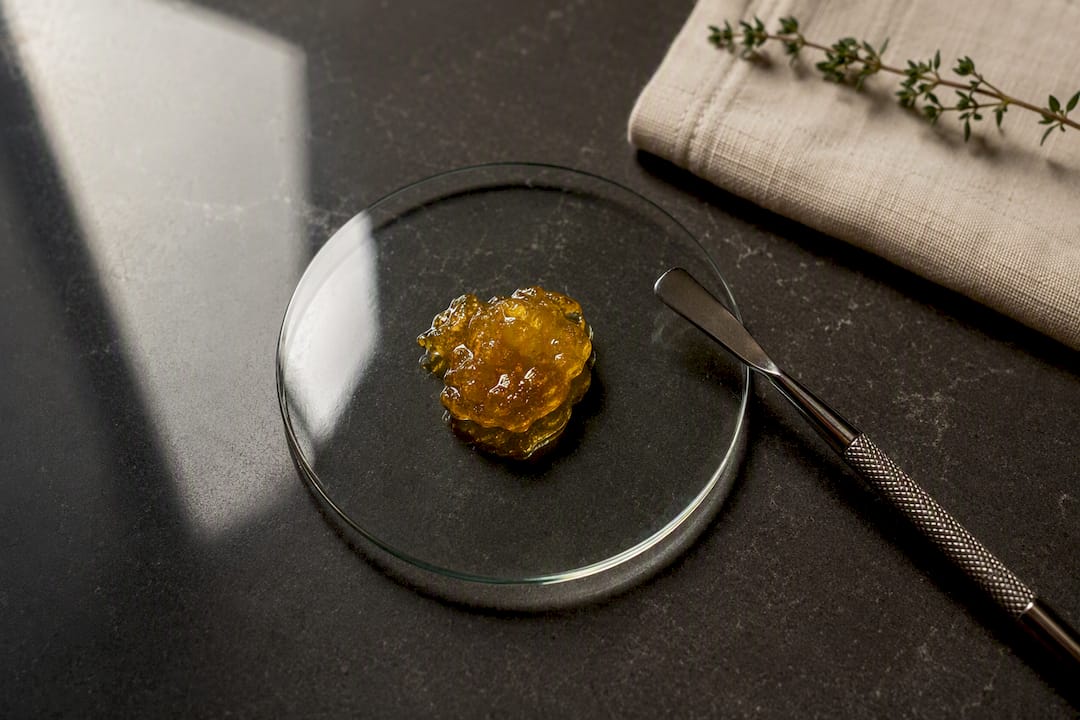
Pro Tip: Darker color in a full-spectrum extract isn’t automatically a red flag. It often just means more chlorophyll or flavonoids came through the extraction, not that the product is lower grade.
Does the Entourage Effect Actually Hold Up?
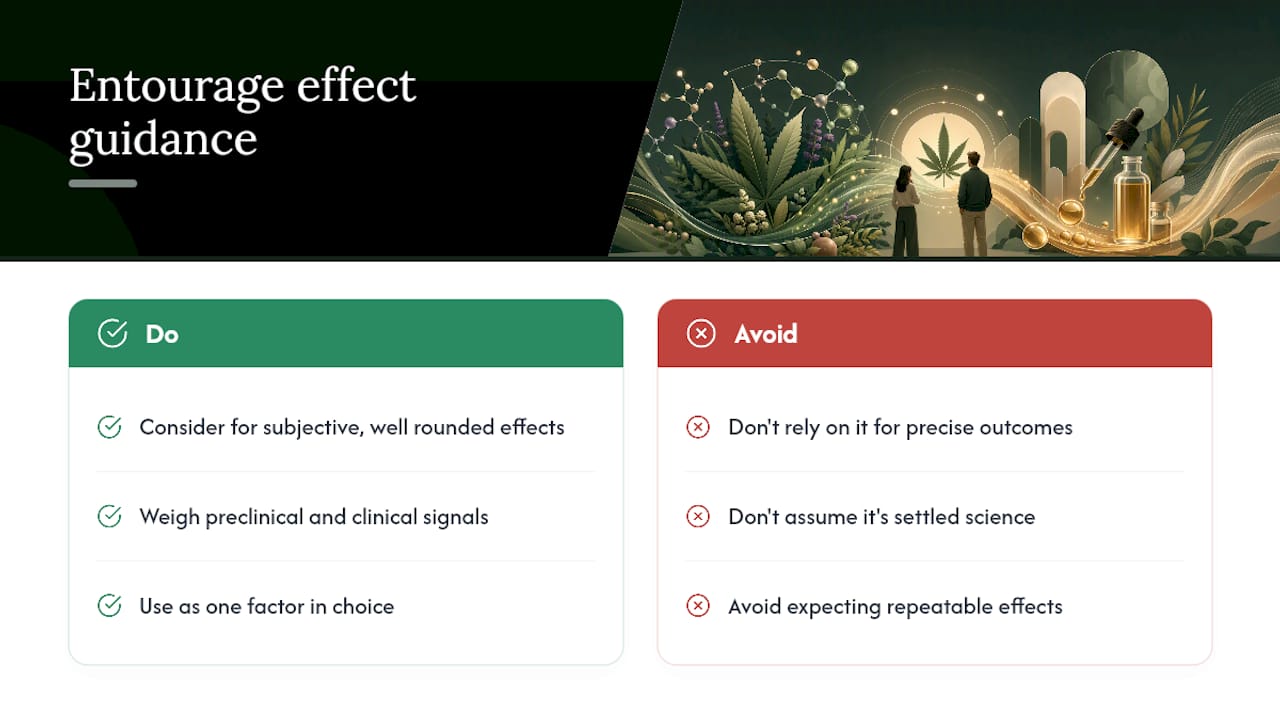
The entourage effect is the theory that cannabinoids and terpenes work better together than any single compound works alone, producing a broader effect than an isolated cannabinoid could on its own. It’s the main scientific argument in favor of choosing full spectrum over distillate or isolate.
The research picture is genuinely mixed. A comprehensive review of the available evidence on the entourage effect found supportive signals in preclinical and some clinical work, but also significant gaps, inconsistent study designs, and a need for more rigorous human trials before anyone can call the effect settled science.
The interaction between cannabinoids and terpenes may produce broader effects than isolated compounds alone, though the current evidence base still leaves real uncertainty about how consistently that plays out in practice.
Practically, the effect probably matters more for subjective experience (how “well-rounded” a high feels) than for any specific therapeutic claim. If you’re chasing a precise, repeatable outcome, don’t bank on the entourage effect to get you there.
How Distillate Is Made and Why Producers Love It
Distillate production starts with a crude extract, then runs it through vacuum distillation, essentially a short-path process that separates compounds by boiling point under low pressure and heat. That process strips out terpenes, waxes, chlorophyll, and most minor cannabinoids, leaving behind a nearly pure target compound.
The result is potency you can count on. Distillate commonly hits 80% to 95% cannabinoid purity, a huge jump from full spectrum’s 40 to 70 percent range. That purity is exactly why producers reach for it:
- Predictable dosing for edibles, where a miscalculated milligram count ruins a batch
- Flavor neutrality, so it doesn’t clash with other edible ingredients or vape flavorings
- Formulation flexibility across vapes, tinctures, and topicals
- Decarboxylation built in, since the heat used during distillation already activates most cannabinoids, meaning many distillates are ready to use in edibles without an extra activation step
Some producers reintroduce terpenes after distillation to recreate a strain’s flavor. That reconstituted profile can taste close to the original cultivar, but it’s a blend added back in, not the plant’s native terpene-to-cannabinoid ratio. If you’re chasing an authentic Cereal Milk experience specifically, that distinction is worth knowing.
Side-by-Side: Flavor, Potency, Stability, and Format Fit
Here’s where the trade-offs get concrete. Full spectrum wins on sensory complexity; distillate wins on consistency and shelf life.
| Attribute | Full spectrum | Distillate |
|---|---|---|
| Flavor/aroma | Strong, cultivar-specific | Neutral, or reconstituted |
| Total cannabinoid % | 40% to 70% | 80% to 95% |
| Perceived effect | Often described as fuller, more nuanced | Clean, dose-predictable |
| Shelf stability | More vulnerable to terpene oxidation | Notably more stable |
| Best formats | Live resin carts, dabbing, whole-plant tinctures | Edibles, standard vape carts, topicals |
Distillate’s simplified chemical profile makes it more shelf-stable than full spectrum, because there are simply fewer volatile compounds around to degrade. Full spectrum’s terpenes are the flavor engine, but they’re also the first thing to break down under heat, light, or air exposure.
One label caveat worth flagging: “full spectrum” isn’t a regulated term. Two products calling themselves full spectrum can have meaningfully different cannabinoid and terpene counts. That’s precisely why the COA matters more than the marketing copy on the box.
Which One Is Right for You?
Match the extract to what you actually want out of the session, not to whichever one sounds more premium on the label.
- Chasing flavor or a ceremonial dab session? Go full spectrum or live resin.
- Need an exact milligram dose for anxiety, sleep, or pain management? Distillate gives you that consistency.
- Making or buying edibles? Distillate blends cleanly without fighting other flavors.
- Working with a tighter budget or want something discreet? Distillate vape carts tend to be more affordable and less pungent.
Before you buy, run through a quick checklist: does the product show a batch-specific COA, a listed terpene profile, a clear potency percentage, and a batch or production date? If any of those are missing, treat it as a red flag, especially label language that mixes contradictory terms like “isolate” and “full spectrum” on the same package.
Pro Tip: Start with half your usual dose on any new distillate product, even if the label matches what you normally buy. Purity that high means small measurement differences hit harder than they would in a full-spectrum product.
Storage, Shelf Life, and Reading a COA
Full spectrum needs more careful storage than distillate does. Keep it cool, dark, and sealed, because its terpenes oxidize faster and that oxidation is what turns a bright, fragrant extract dull and harsh over time. Distillate tolerates more casual storage simply because there’s less volatile material left to break down.
When you’re checking a Certificate of Analysis, look at three sections: total cannabinoid potency, the terpene breakdown (if listed), and the contaminants panel covering pesticides, heavy metals, and residual solvents. Regulatory guidance on cannabis product testing makes clear that lab verification, not marketing language, is what actually confirms what’s in the jar.
Third-party lab data on potency, terpenes, and contaminants is the only reliable way to verify what a cannabis product claims on its label.
Batch-specific lab results for curated menus are often provided so customers can check a COA before committing to a purchase.
An Editorial Take on Full Spectrum vs Distillate
Neither extract type is objectively better, and the industry’s habit of pushing “full spectrum equals premium” oversimplifies a decision that’s really about matching chemistry to use case. My rule of thumb: if you can name the specific outcome you want (a precise dose, a specific flavor, a discreet vape), the extract type usually picks itself.
What curated menus get right is stocking both, because a customer buying a Wedding Cake live resin cart and a customer buying a low-dose distillate tincture for sleep are solving completely different problems.
— Jake
Order Lab-Tested Extracts With Same-Day Delivery
Reading a COA is useful, but browsing verified lab results while you shop is faster. Full-spectrum and distillate products often ship with batch-specific testing data, allowing customers to compare potency and terpene numbers rather than relying on marketing language before checkout.

Green On The Go delivers curated cartridges, tinctures, and edibles from trusted California brands the same day across all of Alameda County, including Berkeley and Dublin. If you’re new to distillate, a full-spectrum tincture, or reading lab reports in general, resources like Kratomvia’s guide to lab reports walk through how to interpret a Certificate of Analysis line by line. Start low, check the batch date, and confirm the COA before you dose. Place your order today and see which extract type actually fits how you want to feel tonight.
Sources
- The ‘entourage effect’ in cannabis: Scientific evidence and current research (PMC review)
- Full Spectrum vs Distillate Explained | Cannalabs Consulting
- THC distillate 101: What it is and how you consume it | Weedmaps
- Analytical and regulatory considerations for cannabis product testing (PubMed abstract)
Recommended
Ready to order?
Licensed, same-day cannabis delivery across Oakland, Berkeley, Fremont and all of Alameda County.
Order Online