
Eating Before Edibles: Meals That Shift Your Peak from 2h to 6.6h
Eating before or with an edible usually delays onset but can raise your total THC exposure, especially when the meal is high in fat. A full, fatty meal can push your peak effects back by several hours and make them stronger and longer once they arrive. An empty stomach tends to hit faster and fade sooner. Either way, the rule stays the same: start with a low dose and wait before you consider more, as recommended by clinical and state guidance.
TL;DR:
- Consuming a high-fat meal can delay the onset of edibles from around 30-90 minutes to over four hours and increase total THC exposure.
- Long-chain fats, such as those in red meat and cheese, significantly boost bioavailability by promoting lymphatic absorption, unlike medium-chain fats.
- Waiting at least 90 minutes to four hours before redosing is crucial, especially after fatty meals, to avoid stacking doses on a delayed peak.
- Combining edibles with alcohol or grapefruit raises risks by intensifying effects or unpredictably prolonging intoxication.
- Lab-tested products with verified potency and consistent meal timing improve predictability, but awareness of food effects remains key for safe consumption.
Table of Contents
- How Does Food Affect How You Eat Edibles?
- What Meal Should You Eat Before Taking an Edible?
- How Long Should You Wait to Redose Edibles?
- Which Foods and Drinks Make Edibles Riskier?
- What Safety Precautions Matter Most With Edibles?
- Local Guidance From Green On The Go’s Delivery Team
- Why Most Edible Advice Skips the Meal Question
- Ready to Pair the Right Edible With Your Next Meal?
- Sources
How Does Food Affect How You Eat Edibles?
THC from an edible has to survive a long trip before it reaches your bloodstream. It moves from your stomach into the small intestine, gets absorbed, and travels straight to the liver before circulating anywhere else. That liver pass, called first-pass metabolism, converts a chunk of the THC into 11-hydroxy-THC, a metabolite that crosses the blood-brain barrier efficiently and tends to produce a heavier, longer-lasting effect than THC itself. That’s the biochemical reason edibles feel different from smoking, and it’s also why food timing matters so much.
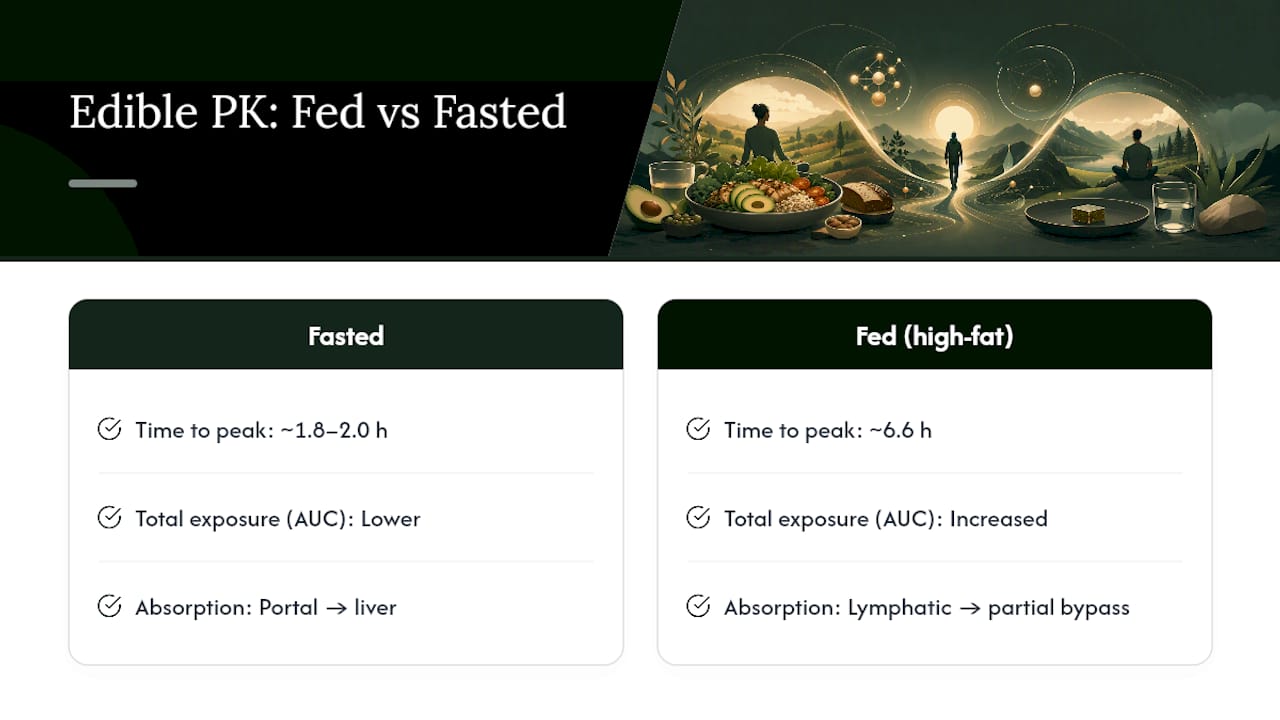
Dietary fat changes the route entirely. When you eat fat alongside THC, your gut builds tiny transport packages called micelles, which get repackaged into chylomicrons. Those chylomicrons carry cannabinoids into the lymphatic system instead of straight to the liver, letting some THC bypass first-pass metabolism and enter circulation more completely.
The numbers back this up. A fed versus fasted clinical study found that THC’s time to peak concentration jumped from roughly 1.8 to 2.0 hours on an empty stomach to about 6.6 hours after a high-fat meal, with total drug exposure (measured as AUC, or area under the curve) increasing under fed conditions. That’s not a small shift. It’s the difference between feeling something before your show starts and still waiting when the credits roll.
What Meal Should You Eat Before Taking an Edible?
Not all food affects edibles the same way, and the fat content of your meal matters more than the calorie count. A greasy burger and fries will slow onset and stretch total exposure further than a bowl of oatmeal, even if the oatmeal has more calories.
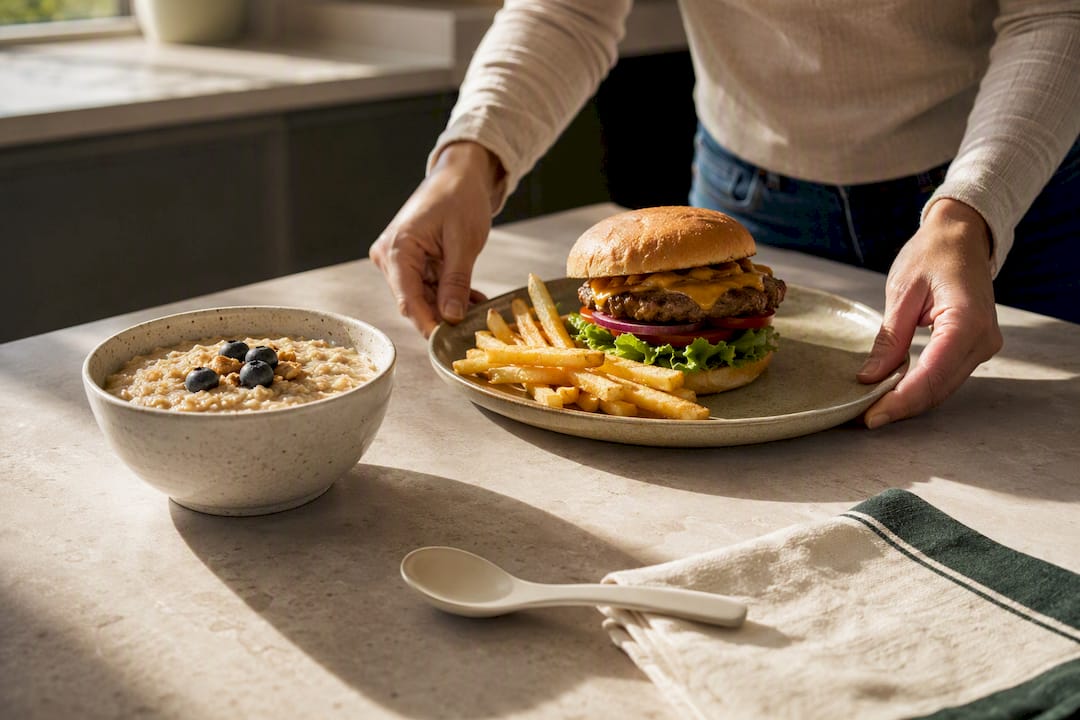
Long-chain fats, the kind found in red meat, cheese, and fried food, drive the strongest increase in bioavailability because they’re what your gut packages into those lymphatic-transport chylomicrons. Medium-chain triglycerides, common in coconut oil and some cannabis-infused products, get absorbed differently and don’t trigger the same lymphatic shortcut, so formulations built around MCTs can behave more predictably than oil-based edibles made with long-chain fats.
For steadier results, aim for moderation over extremes:
- A small snack with healthy fats, like avocado toast or yogurt with nuts, taken 30 to 60 minutes before your edible tends to smooth out the experience compared to a heavy meal or an empty stomach.
- Skipping food entirely usually means faster onset and a shorter, less intense peak, which suits people who want quicker feedback on dose.
- A large, fat-heavy meal maximizes both delay and intensity, which is fine if you’re planning ahead but risky if you’re impatient.
Pro Tip: If you want a predictable evening, eat the same type of light, moderately fatty snack every time you dose. Consistency in your meal matters almost as much as consistency in your dose.
How Long Should You Wait to Redose Edibles?
Dosing an edible isn’t a guessing game if you follow a few fixed rules. Here’s a practical sequence:
- Start with 2.5 to 5 mg of THC if you’re new or sensitive. Many jurisdictions treat 10 mg as a standard single serving, but that’s a ceiling for tolerant users, not a starting point.
- Wait at least 90 minutes to 4 hours before deciding whether to take more, since clinical guidance notes edibles can take 30 minutes to 4 hours to kick in.
- Extend that wait after a meal. If you ate something fatty beforehand, anticipate a peak anywhere from 2 to 6 or more hours out. Redosing at the 90-minute mark in that scenario is how people end up stacking doses on top of a delayed peak they haven’t felt yet.
- If you’ve overdone it, hydrate, sit somewhere calm and familiar, and remind yourself the feeling will pass. Seek medical attention for chest pain, severe confusion, or loss of consciousness.
| Stomach state | Typical onset | Typical peak | Redose wait |
|---|---|---|---|
| Empty stomach | 30–90 minutes | 1–2 hours | 90 minutes minimum |
| Light snack (moderate fat) | 90 minutes | 2–3 hours | 2 hours minimum |
| Heavy, high-fat meal | 1–3 hours | 4–6+ hours | 4–6 hours minimum |
Which Foods and Drinks Make Edibles Riskier?
Some combinations don’t just change timing, they change safety. Alcohol layered on top of an edible amplifies sedation and impairs judgment about how much you’ve actually consumed, which is exactly how people end up redosing too soon. Grapefruit contains compounds that interfere with the same liver enzymes that process THC, potentially intensifying or extending effects in ways that are hard to predict. High-fiber meals can slow gastric emptying unevenly, adding another layer of unpredictability on top of fat content.
For steadier pairings, keep it simple:
- Small fatty snacks (nut butter on toast, cheese and crackers) for a moderate, more predictable lift.
- A light protein and vegetable plate if you want a full meal without heavy grease.
- Skip alcohol and grapefruit entirely on days you’re dosing, especially with a new product.
What Safety Precautions Matter Most With Edibles?
Start low, go slow, and treat the wait as non-negotiable. Public safety guidance from Colorado recommends single servings of 10 mg THC or less and waiting up to four hours before considering more, longer still if you ate beforehand.
One detail people skip: check with a clinician if you take sedatives, blood thinners, or medications metabolized through liver enzymes known as CYP substrates, since cannabinoids can interact with how those drugs are broken down. Store edibles in child-resistant, clearly labeled containers away from anything that looks like regular food. Seek emergency care for severe chest pain, pronounced psychosis, or loss of consciousness. Milder anxiety or a racing heart, while unpleasant, usually resolves with time in a calm setting.
Local Guidance From Green On The Go’s Delivery Team
All products delivered come with lab results verifying potency, so you know the dosage is accurately represented. That consistency matters more once you understand how much food timing can shift your experience.
Our drivers hear the same questions daily from Oakland and Berkeley customers: what to eat, when to eat it, and how long to wait. The short answer is what this article covers. For the flavor side, our strain guides, including notes on the Cherry Zest and Chocolate Chip profiles, help you match an edible’s taste and effect to what you’re already planning to eat.
Why Most Edible Advice Skips the Meal Question
Most cannabis content treats dosing as a single variable: milligrams in, effect out. That’s incomplete. The pharmacokinetic data shows meal timing is arguably as influential as dose size, yet it barely gets mentioned outside clinical literature.
Here’s what I think gets underrated: people blame “bad batches” or “weak edibles” for inconsistent experiences when the real variable was what they ate three hours earlier. A product that felt underwhelming on an empty stomach might feel completely different after a fatty lunch, and that’s not a quality problem, it’s physiology.
The fix isn’t complicated, but it does require intention. Decide before you dose whether you want a fast, contained experience or a longer, stronger one, then eat accordingly. Track it. Most people never do, which is why so many edible experiences feel like a coin flip instead of something they controlled. Lab-tested products with accurate labeling, paired with a documented strain guide, remove one variable. Meal timing is the other one, and it’s entirely in your hands.
— Jake
Ready to Pair the Right Edible With Your Next Meal?
The service provides same-day access to lab-tested edibles with clear, verified serving sizes, so the dosing math in this guide can hold up once your order arrives. No guessing about potency, no unmarked jars, just products that match their labels.

Whether you’re planning a light snack and a fast, contained high or a full dinner followed by a slower, longer peak, our strain guides can help you pick an edible that fits the plan. Place an order through our Alameda County delivery page and get lab-verified products delivered to your door the same day, timed around whatever you’re eating tonight.
This article is general information, not a substitute for advice from a qualified doctor. Consult a qualified healthcare professional about your own circumstances before acting on anything here.
Sources
- How food changes the path cannabinoids take through your body | The Cannigma
- Trying Edibles? Read This Advice From a Doctor First | Backus Hospital
- Safety with edibles | Colorado Cannabis
Recommended
Ready to order?
Licensed, same-day cannabis delivery across Oakland, Berkeley, Fremont and all of Alameda County.
Order Online