
One 20 mg RCT: CBN for Sleep; CBD for Anxiety and Inflammation
If you’re losing sleep, early evidence points to CBN as the more targeted option; if you’re managing anxiety, inflammation, or a chronic condition, CBD carries the stronger clinical track record. Neither cannabinoid is well studied compared to a standard pharmaceutical, and both can interact with medications, so treat this as a starting point for a conversation with your doctor, not a replacement for one.
TL;DR:
- CBN may be more targeted for sleep, with one controlled trial showing improvements in sleep disturbance and next-day fatigue at a 20 mg dose.
- CBD has a stronger clinical record for anxiety, inflammation, and seizure disorders, supported by FDA-approved medication and multiple small trials.
- Both cannabinoids can interact with medications through liver enzyme inhibition, especially CBD, so consulting with a healthcare provider is essential before use.
- CBD products vary widely in dosage and content, making lab verification and third-party testing crucial for accurate dosing and safety.
- The effectiveness of cannabinoid blends is not proven; a focused, well-dosed monotherapy may outperform unproven full-spectrum products.
Table of Contents
- CBD vs CBN: What Actually Separates Them
- CBN vs CBD: Where They Overlap and Where They Split
- What Clinical Research Actually Shows
- Safety, Side Effects, and Drug Interaction Risks
- Forms, Dosing, and How You Take It Changes the Effect
- How to Choose Between CBN and CBD
- How Greenonthegodelivery Thinks About Product Quality
- Why the “Which One Is Better” Question Is the Wrong Frame
- Ready to Try Lab-Tested CBN or CBD? Here’s How to Order
- Sources
- FAQ
CBD vs CBN: What Actually Separates Them
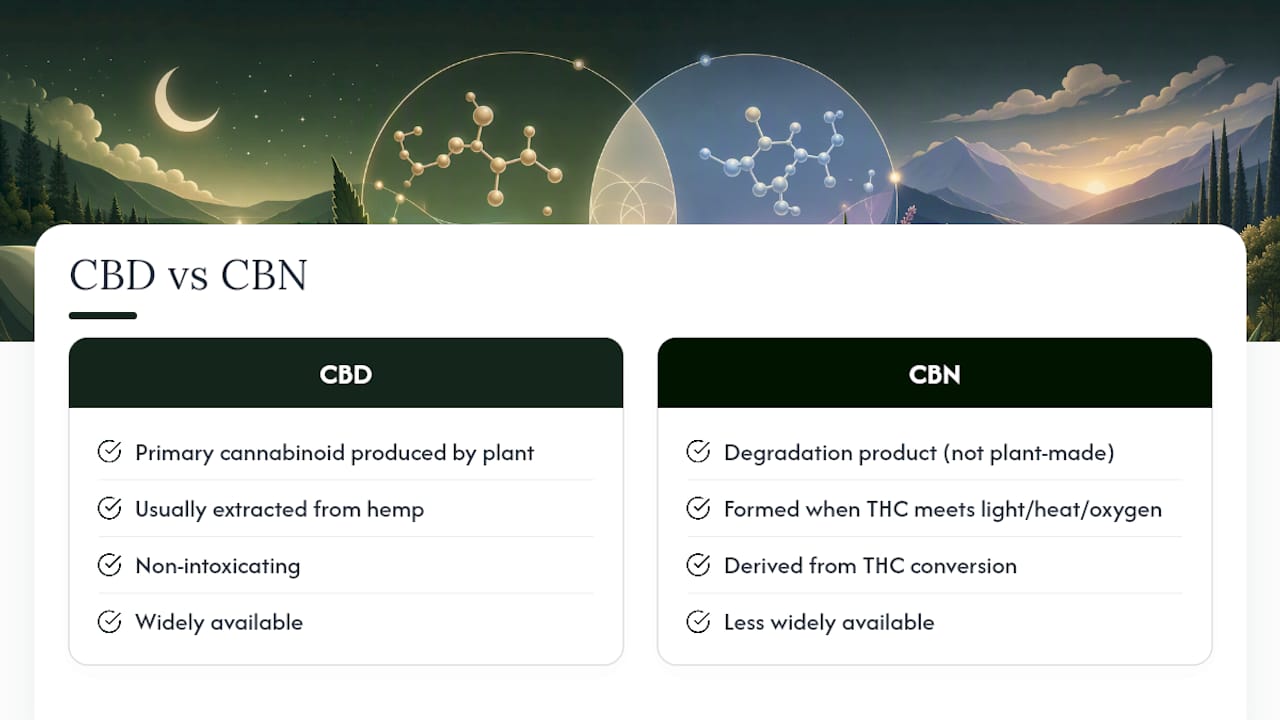
The two compounds come from different places on the same plant timeline, and that origin story explains almost everything else about how they’re used. CBD is a primary cannabinoid the plant produces directly, usually extracted from hemp. It’s nonintoxicating, widely available, and backed by a real body of clinical research. CBN doesn’t grow that way at all. It’s what THC turns into after it’s exposed to light, heat, and oxygen over time, which makes it a degradation byproduct rather than a compound the plant makes on purpose. That single fact drives the difference in research depth, product availability, and how confidently anyone can talk about dosing.
What is CBD? Origin, mechanism, and where the evidence stands
CBD doesn’t bind cleanly to the same receptors THC does. Instead, it works indirectly on the endocannabinoid system while also touching serotonin receptors and inflammatory pathways, which is part of why it shows up in anxiety and inflammation research.
The clearest proof of concept is Epidiolex, a purified CBD medication the FDA approved for specific epilepsy syndromes. Trials supporting that approval used doses far higher than what’s in a typical bottle from a wellness shop, which matters when you see marketing claims built around “clinically proven” CBD. Randomized evidence also supports some anxiolytic effects, though data on acute pain relief remains thin.
Where things get messy is at the retail level:
- Isolate, broad-spectrum, and full-spectrum products all behave differently, and labels rarely explain the distinction clearly.
- Milligram counts on packaging don’t always match lab results.
- A certificate of analysis (COA) is the only real way to confirm what’s actually in the bottle.
Epidiolex trials used doses far higher than most consumer CBD products, achieving meaningful seizure reduction at therapeutic levels.
What is CBN? Origin, mechanism, and early research signals
CBN forms as THC ages and breaks down, which means its concentration in raw plant material is inconsistent and generally low. You can’t reliably grow a “high CBN” strain the way you can breed for high THC or high CBD; instead, manufacturers typically produce concentrated CBN through controlled oxidation or synthesis, a process that adds its own variability between brands.
Pharmacologically, CBN binds to cannabinoid receptors, but far more weakly than THC does. Its therapeutic targets, based on preclinical work, include sleep, appetite, and pain, though human data lags well behind the marketing.
- CBN’s receptor binding is often described as roughly a quarter of THC’s affinity.
- One human trial has actually tested CBN for sleep in a controlled setting.
- Appetite and analgesic effects are still mostly animal-study findings, not confirmed in people.
A randomized, placebo-controlled trial using a controlled dose of CBN found improved sleep disturbance and less next-day fatigue, which is the main human data point the entire CBN-for-sleep narrative rests on.
CBN vs CBD: Where They Overlap and Where They Split
Both compounds interact with the endocannabinoid system, but they don’t do it the same way, and that difference shows up in what each one is actually good for.
- CBD works more broadly, through serotonin and inflammatory pathways in addition to the endocannabinoid system, which is why its evidence spans anxiety, seizure disorders, and inflammation.
- CBN’s effects are tied more narrowly to weak cannabinoid receptor activity, with sleep as the best-supported target so far.
- CBD is nonintoxicating at any studied dose; CBN is described as minimally psychoactive at higher amounts, though nowhere near THC’s intensity.
- CBD is everywhere, since hemp naturally produces it in usable amounts. CBN is rarer on shelves because it has to be manufactured from degraded or processed material rather than harvested directly.
If your symptom list includes trouble falling or staying asleep, CBN sits closer to what’s actually been tested. If it includes anxiety, chronic inflammation, or a diagnosed seizure disorder, CBD has the deeper research bench.
What Clinical Research Actually Shows
The honest answer is: less than the marketing suggests, for both compounds, though CBD has a real head start.
CBD’s strongest evidence is Epidiolex, tested in randomized trials for specific epilepsy syndromes and now FDA-approved on that basis. Beyond epilepsy, systematic reviews describe a landscape of mostly small, short trials for anxiety and related conditions, enough to suggest a real effect but not enough to call it settled science. Pain relief from CBD alone has even less controlled human data behind it.
CBN’s case rests almost entirely on one study. A 2024 randomized, placebo-controlled trial gave participants 20 mg of CBN and found reduced sleep disturbance and daytime fatigue. Notably, adding CBD to the CBN dose didn’t improve outcomes any further, which undercuts the popular assumption that combining cannabinoids automatically works better.
The idea that stacking CBD and CBN produces better sleep than CBN alone isn’t supported by the trial data. The combination group performed no better than CBN by itself.
Both bodies of research share the same weaknesses: small sample sizes, short follow-up windows, and products that vary wildly from what’s actually studied in a lab. Reviews of the so-called “entourage effect” note there’s still no established science on optimal cannabinoid ratios, which means a product claiming a “perfect blend” is making a marketing claim, not a clinical one. The practical takeaway is to treat either compound as worth a short, monitored trial for a specific symptom, not a general wellness fix.
Safety, Side Effects, and Drug Interaction Risks
CBD’s side effect profile is reasonably well documented: dry mouth, gastrointestinal upset, and drowsiness show up most often in trial data. CBN’s side effects are much less characterized simply because so few people have been studied taking it in controlled settings.
The bigger concern with CBD is pharmacological, not just symptomatic. High-dose, chronic CBD use can inhibit CYP450 liver enzymes, the same enzyme system that metabolizes a long list of common medications, including blood thinners and several antiseizure drugs. That interaction can raise or lower how much of another medication stays active in your system.
- Anticoagulants, some antiseizure medications, and other CYP450-metabolized drugs carry the highest interaction risk with CBD.
- Hepatotoxicity signals have appeared in high-dose CBD research, which is why liver monitoring is sometimes recommended for sustained use.
- CBN’s interaction profile isn’t well mapped yet, so caution should default to the same level as CBD until more data exists.
- Starting at a low dose and increasing slowly gives you a chance to notice a reaction before it becomes a problem.
Pro Tip: Ask your pharmacist to run your current prescriptions through a CYP450 interaction check before adding CBD or CBN. It takes five minutes and can flag a conflict your doctor might not think to mention.
If you’re on any regular medication, loop in your prescriber before starting either compound, and always check for a third-party lab certificate before buying anything.
Forms, Dosing, and How You Take It Changes the Effect
Route of administration changes both how fast a cannabinoid kicks in and how long it lasts. Inhaled products act within minutes but fade quickly; oral tinctures and gummies take 30 to 90 minutes to kick in but last several hours; topicals stay localized and don’t produce systemic effects at all.
- Match the format to the goal. Sleep support generally calls for an oral product timed an hour before bed, not a fast-acting inhaled one.
- Anchor your dose to trial data where you can. The CBN sleep trial used 20 mg; Epidiolex’s therapeutic CBD range is far higher than most retail tinctures, so don’t expect supplement-level CBD to replicate seizure-trial results.
- Check the COA every time, since labeling accuracy on cannabinoid content varies widely across retail products.
- Avoid stacking sedatives. Combining CBN with melatonin, alcohol, or other sedating substances without medical input increases the risk of excessive next-day grogginess.
How to Choose Between CBN and CBD
Start with your goal, not the product name on the label. If sleep is the main issue, a short trial of CBN, ideally something close to the 20 mg dose used in research, is the more evidence-aligned starting point. If anxiety, inflammation, or a chronic symptom is the target, CBD has more research behind it and a wider range of formats to experiment with.
- Give any trial one to three weeks before deciding it isn’t working, and start at the low end of the dosing range.
- Walk away from products with vague milligram labeling, no COA, or claims that sound too broad to be credible.
- Bring a full medication list to your doctor, along with any liver conditions, pregnancy or breastfeeding status, and upcoming surgeries or drug screenings.
- Stop and call your doctor if symptoms worsen, or if you notice signs of liver trouble like unusual fatigue, abdominal pain, or yellowing skin or eyes.
Pro Tip: Keep a simple log for the first two weeks: dose, time taken, and how you slept or felt the next day. That record is often more useful to a clinician than a vague “it kind of helped.”
How Greenonthegodelivery Thinks About Product Quality
Reliable answers about CBN and CBD start with reliable products, which is why Greenonthegodelivery only carries Wedding Cake and similar strains with verifiable lab results attached, not just a brand claim. Every product moving through a licensed supply chain gets a batch certificate you can actually check, so what’s on the label matches what a lab confirmed. That’s the standard worth applying to any cannabinoid product you’re considering, sourced through Greenonthegodelivery or anywhere else.
Why the “Which One Is Better” Question Is the Wrong Frame
People keep asking whether CBN or CBD is objectively better, and that question misses what the research actually supports. CBN has one solid trial behind a very specific use case: falling asleep and staying asleep. CBD has a wider, messier body of evidence spanning epilepsy, anxiety, and inflammation, but even there, the gap between trial doses and what’s sold at retail is bigger than most product pages admit.
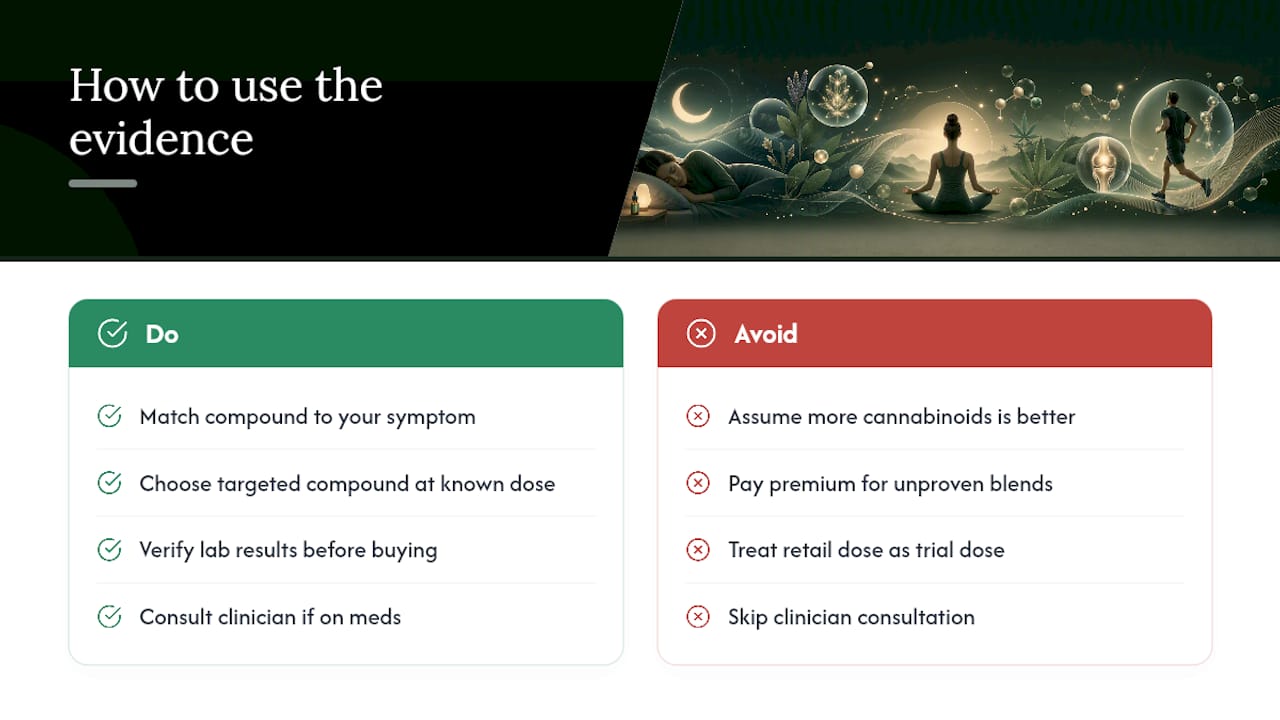
The real mistake I see people make is assuming more cannabinoids in one product automatically means a better product. The 2024 CBN trial found that adding CBD to CBN didn’t improve sleep outcomes over CBN alone, which should be a wake-up call for anyone paying a premium for “full-spectrum everything” formulas marketed as synergistic. Sometimes one targeted compound at a known dose beats a blend with no data behind the ratio.
If you take one thing from the research, take this: match the compound to the specific symptom you’re trying to treat, verify the lab results before you buy, and loop in a clinician if you’re on any regular medication. That’s not a hedge. That’s just how you use an early-stage evidence base responsibly.
— Jake
Ready to Try Lab-Tested CBN or CBD? Here’s How to Order
This service offers a straightforward alternative to guessing at online retailers or unlicensed sellers. Products on the menu come with verifiable batch certificates, so you can confirm that the milligram count on the label matches lab results.

If you’re 21 or older and located in Alameda County, you can browse same-day delivery across Alameda County and check lab results before you check out. Readers in Berkeley have a dedicated page for same-day cannabis delivery in Berkeley, and the same applies to Dublin, Alameda, Albany, San Lorenzo, and Cherryland. Always confirm your local laws apply to your situation, and check with a clinician before combining any cannabinoid product with existing medications. Start your order today and look for the COA link on the product page before you commit to anything.
FAQ
Is CBN More Effective Than CBD?
Neither is universally “more effective.” CBN has the stronger signal for sleep specifically, based on one randomized trial, while CBD has a broader evidence base covering anxiety, epilepsy, and inflammation.
What Does CBN Make You Feel Like?
Most people report mild sedation and reduced sleep disturbance rather than a strong high, though CBN is described as minimally psychoactive at higher doses in some users.
Is CBN Safe to Take Every Night?
Long-term nightly safety data doesn’t exist yet, since the main human trial only tested short-term use, so nightly use should be discussed with a clinician rather than assumed safe.
Is CBN Hard on the Liver?
CBN’s liver effects aren’t well studied, but CBD, its more-researched counterpart, can inhibit liver enzymes and has shown hepatotoxicity signals at high doses, which is a reasonable caution to extend to CBN until more data exists.
Ready to order?
Licensed, same-day cannabis delivery across Oakland, Berkeley, Fremont and all of Alameda County.
Order Online